×

The Standard e-Paper
Home To Bold Columnists
 The Standard Group Plc is a
multi-media organization with investments in media platforms spanning newspaper
print operations, television, radio broadcasting, digital and online services. The
Standard Group is recognized as a leading multi-media house in Kenya with a key
influence in matters of national and international interest.

Audio By Vocalize
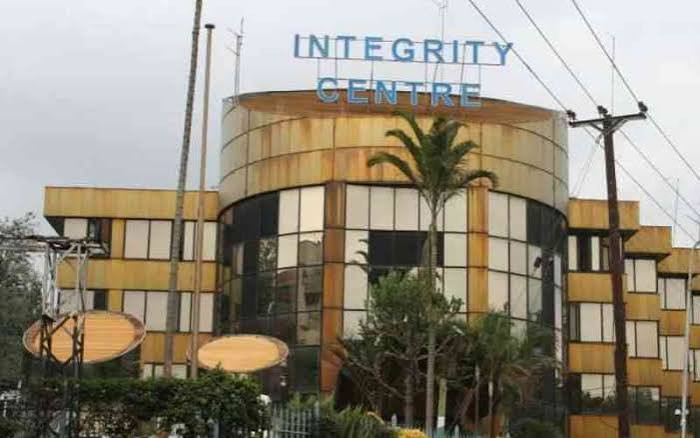
I submit that 7 of 10 Kenyan politicians fail the Chapter six requirements of leadership and integrity as per the Constitution of Kenya 2010 when measured against Six Sigma.
Six Sigma began at Motorola in the 1980s as a rigorous, data-driven, quality management and process improvement methodology for eliminating defects. Named after the statistical concept of six standard deviations from the mean in a normal distribution, it aims for a process so tightly controlled that it produces only 3.4 defects per million opportunities. The goal is near-perfection where variation is measured, root causes are attacked, and quality becomes non-negotiable. Anything less is failure by design.
Apply that standard to Kenya’s political class and the verdict is brutal. Relative to Chapter Six of the 2010 Constitution, which is the nation’s quality specification for leadership, we operate at roughly one sigma. At that level, roughly seven out of ten outputs fail. Most of what the system produces does not meet required standard. This is not hyperbole. It is the only honest reading of the evidence.
Chapter Six is unambiguous. Public office is a public trust. Leaders must be selected for personal integrity, competence and suitability. They must act with objectivity, avoid conflicts of interest, declare personal interests that clash with public duty, serve selflessly, and remain accountable.
Their private and public conduct must not demean the office or compromise the public interest. These are the specification limits. Six Sigma would demand we measure performance against them relentlessly and drive defects toward zero. Instead, we treat the chapter as optional poetry.
Look at the dominant culture of political bargaining. Appointments and clearances are routinely negotiated as rewards for ethnic balance, coalition loyalty or campaign finance rather than integrity. By the time a nominee reaches vetting, the real decision has already been made in midnight encounters.
Public participation becomes theatre. Integrity advisories from the Ethics and Anti-Corruption Commission are frequently ignored. The presumption of innocence is stretched into a shield that allows individuals under active investigation or facing serious allegations to sail into office. When integrity is traded for political convenience, Chapter Six is rendered irrelevant.
This produces the corruption perception that hangs over the country like a permanent cloud. International indices and domestic surveys consistently show citizens believe public office is routinely used for private gain. The perception is not manufactured by foreign agencies; it is fed daily by the gap between constitutional promise and lived reality. When the same names cycle through scandals, recoveries, and returns to influence, the public draws the only rational conclusion, that the system is designed to protect rather than purify. Nowhere is the defect more measurable than in the gap between declared income and verified wealth. Chapter Six and the Leadership and Integrity Act require honest disclosure of assets and liabilities. Yet the public repeatedly watches officials whose lifestyles, property portfolios and business interests appear wildly disproportionate to their known legitimate earnings. Lifestyle audits are announced with fanfare and then quietly diluted or delayed. Declarations are filed as formalities rather than subjected to rigorous, public verification. When unexplained wealth is met with silence or procedural obstruction instead of consequence, the message is clear, that the specification limits do not apply to the powerful.
Citizens must stop treating this as normal. Ask the hard questions. Why do candidates with unresolved integrity issues clear the Independent Electoral and Boundaries Commission or the National Cohesion and Integration Commission with such regularity?
Why does Parliament rubber-stamp nominees whose records raise obvious Chapter Six red flags? Why are wealth declarations not routinely cross-checked against land registries, company records and tax data, and the results published? Why does political bargaining still outweigh competence and honesty in the allocation of public power?
Every time we accept a leader who fails these tests, we endorse a one-sigma process that comprises 69 per cent defects as has been proven in Kenya’s Corruption Perception Index score of 30 out of 100.
Chapter Six was written as Kenya’s Six Sigma standard for leadership, which is an explicit rejection of the old order of impunity.






Subscribe to our newsletter and stay updated on the latest developments and special offers!