×

The Standard e-Paper
Join Thousands Daily
 The Standard Group Plc is a
multi-media organization with investments in media platforms spanning newspaper
print operations, television, radio broadcasting, digital and online services. The
Standard Group is recognized as a leading multi-media house in Kenya with a key
influence in matters of national and international interest.
The Standard Group Plc is a
multi-media organization with investments in media platforms spanning newspaper
print operations, television, radio broadcasting, digital and online services. The
Standard Group is recognized as a leading multi-media house in Kenya with a key
influence in matters of national and international interest.

Audio By Vocalize
Bulgarian vessel Ruen arrives at Varna port after being hijacked with 17 crew members taken hostage, May 10, 2024. [AFP]
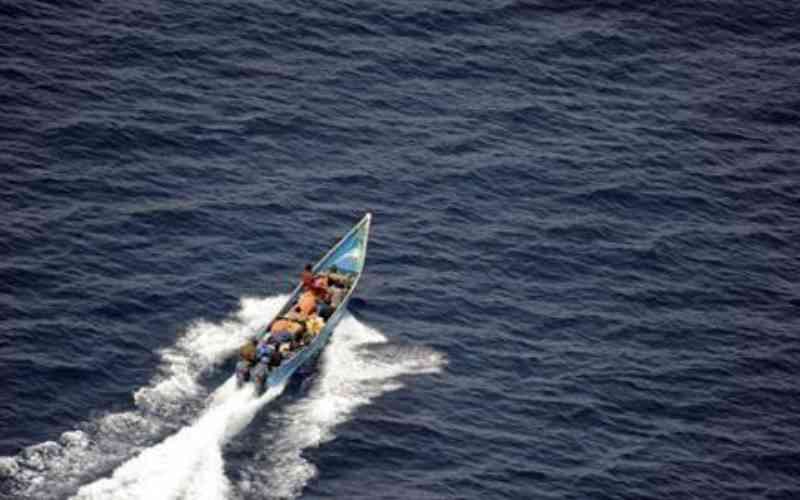
Two weeks ago, I wrote about fresh concerns over the resurgence of Somali pirates targeting transiting ships in the Gulf of Aden after the outbreak of the war between the United States, Israel and Iran.
Wednesday this week, guided-missile destroyer INS Kolkata foiled a suspected piracy attempt on merchant vessel MV Mashallah 1 near the Gulf of Aden.
The destroyer was acting on intelligence inputs of pirate activity in the vicinity, launching its onboard helicopter for aerial surveillance while boarding teams were dispatched to sanitise the area and assess the threat.
The Navy said the timely intervention secured the safety of the merchant vessel and pre-empted what could have been a full-blown piracy attack.
The incident is the latest indicator of a renewed threat from Somali pirate networks, which had been largely suppressed through sustained multinational naval pressure over the past decade but are now showing signs of fresh aggression.
This incident was after an oil tanker transiting the Gulf of Aden fired warning shots at suspicious vessels near one of the world’s busiest maritime trade corridors.
According to maritime security agencies, the May 22, 2026, incident occurred near Yemen’s Socotra Island, approximately 98 nautical miles from the tanker’s route, according to information shared with the United Kingdom Maritime Trade Operations (UKMTO).
Armed security personnel onboard the vessel reportedly opened warning fire after several small boats approached under what authorities described as suspicious circumstances.
No injuries or damage were reported, but the encounter has intensified fears among international shipping and security agencies over growing instability in waters off Somalia’s coastline.
The latest confrontation raises concerns that pirate networks operating along northern Somalia may be regrouping, years after international naval operations significantly reduced attacks in the region.
The Gulf of Aden remains a critical maritime artery linking Europe, Asia and the Middle East, carrying billions of dollars in global trade and energy supplies annually.
The European Union Naval Force’s Maritime Security Centre for the Indian Ocean (MSCIO) described the incident as the third piracy-related event reported within a week.
On May 18, maritime surveillance teams detected a suspicious skiff near the Puntland port city of Bosaso, an area historically linked to pirate activity. Days earlier, on May 15, a fast-moving armed boat allegedly intercepted a fishing vessel, with men onboard reportedly carrying weapons resembling AK-47 rifles.
Maritime security reports indicate that at least three vessels remain under the control of suspected Somali pirate groups. The oil tanker MT Honour 25 was hijacked on April 21, followed by the cargo vessel Sward on April 26 and tanker MT Eureka on May 2.
Stay informed. Subscribe to our newsletter
Security officials say pirates holding the MT Eureka are demanding nearly $3 million in ransom.
International maritime agencies continue to warn commercial vessels to remain at least 150 nautical miles away from Somalia’s coastline due to heightened risks of hijackings and armed attacks.
Somali piracy increased in intensity in 2005, particularly in Puntland, where illegal fishing licenses are sold and are beyond the jurisdiction and control of the state. Somali pirates have made piracy attractive to the vulnerable Somali population. Unfortunately, the instability created by this situation has made it difficult for international aid to reach Somalia.
Piracy in the Gulf of Aden increased in 2011, rising to 212 attacks during the year, with hostage taking. The pirates targeted all vessels, including commercial, international trade or military vessels.
At their height, Somali pirates targeted ships sailing through the Gulf of Aden and the Indian Ocean, demanding high ransoms for the release of captured vessels and crew members. This led to vessels avoiding the route and pushing insurance as well as the security of vessels higher. The costs were passed to shipping lines and consequently to businesses around the East African region.
The piracy menace caused delays in maritime schedules as vessels had to navigate farther from the Somali coastline, where the pirates reigned supreme
Kenya was reported to be the biggest beneficiary of the menace as the proceeds from piracy were invested in Nairobi, leading to a steep rise in the price of property in areas like Eastleigh, Karen and Kilimani.
The intervention of EUNAVFOR (European Union Naval Force) with the authorisation of the United Nations Security Council reduced the spate of hijacking in the Gulf of Aden and, for a while, ensured vessels passed through without any worries
The Gulf of Aden is an important maritime route connecting the Red Sea to the Indian Ocean, vital for global shipping. However, for the past two decades, it has struggled with instability, becoming a hotspot for piracy. Despite this, international cooperation has led to improved security for this key maritime passage.
Importers in East Africa are keeping their eyes wide open and ears on the ground to see how the rise in piracy will be tackled.
And back to Somalia's political situation, the National Independent Electoral and Boundaries Commission (NIEBC) has officially released the list of Members of Parliament elected in the recently concluded elections in Somalia’s South West State.
This marks a significant step in the country’s ongoing electoral process.
In a statement issued by the commission, NIEBC confirmed that a total of 92 MPs were elected through a process the commission said was carried out in line with the approved electoral procedures and timelines guiding the regional elections.
The electoral body congratulated the successful candidates and called on political stakeholders, traditional elders and residents of the region to support the post-election process and maintain stability.
The announcement comes amid continued political discussions surrounding Somalia’s broader electoral transition, as federal and regional leaders deliberate on the country’s future electoral model and governance structure.
South West State was among the regional administrations scheduled to conduct elections under the commission’s 2026 electoral calendar, with the process attracting significant political attention from both supporters and opposition figures.
The newly elected lawmakers are expected to proceed with the next constitutional steps, including swearing-in ceremonies and participation in subsequent parliamentary processes within the regional administration.
NIEBC has maintained that the ongoing elections across the Federal Member States form part of Somalia’s gradual transition toward a more representative democratic system and wider public participation in governance.
The commission is also expected to continue overseeing electoral activities in other Federal Member States as the country advances preparations for future electoral reforms and broader democratic processes
The next stop for the elections seems to be the state of Galmudug, where political jostling is already taking shape.








Subscribe to our newsletter and stay updated on the latest developments and special offers!








 join
join