×
App Icon
The Standard e-Paper
Informed Minds Prefer The Standard
★★★★ - on Play Store
Download Now

What counties should do to rein in wayward motorists

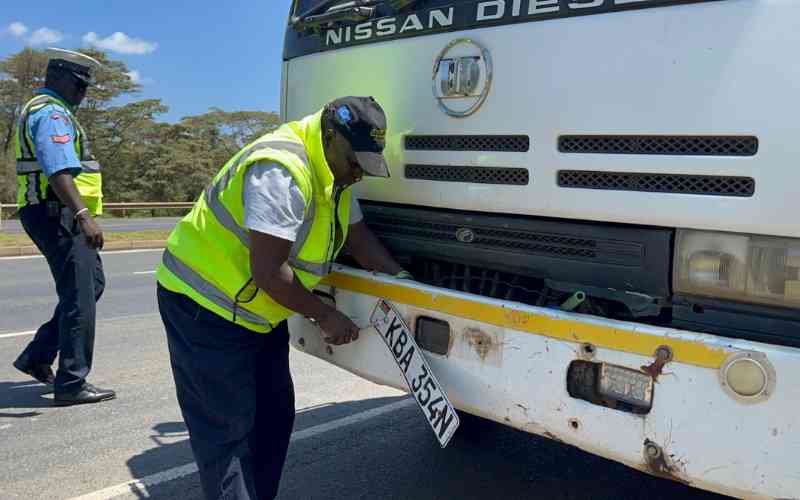
An NTSA officer confiscates number plants from vehicles that were found non-compliant with traffic laws during an enforcement exercise on Nairobi's Southern Bypass on January 2 2026. [Juliet Omelo, Standard]

Every year, the average Kenyan motorist drives about 22,000 kilometres – the distance from Nairobi to Cape Town and most of the way back again. That is a lot of tarmac, a lot of fuel, and far too many close calls with the millions of us who never sit behind a steering wheel.

While motorists clock those kilometres, pedestrians – the overwhelming majority of road users – are treated as moving obstacles to be hooted at, scattered, or worse.


We all know the scenes. A mother with a child on her back steps onto a zebra crossing and cars accelerate instead of braking. An elderly man in a residential estate jumps aside as a saloon swerves around him. A schoolgirl is knocked down at a junction because the turning driver “didn’t see her”. These are not isolated incidents; they are the daily reality for the 50-plus million Kenyans who walk and share the roads with barely 2.5 million registered vehicles, according to the latest National Transport and Safety Authority figures.

Pedestrians outnumber motorists by more than 20 to one, yet we are the ones expected to apologise for existing. The injustice goes deeper than bad manners.


Every kilometre of road those 22,000 annual motorist kilometres devour was paid for, in large part, by the very pedestrians who are now treated with contempt. Fuel levies help, but the bulk of our highways, expressways and county roads come from general taxation, VAT, borrowed billions, and county rates – money extracted from market women, watchmen, teachers, and boda boda riders who may never own a car in their lives.

In short, pedestrians subsidise the comfort and speed of motorists, then get hooted at for using the zebra crossings.

National law is already clear: Section 94 of the Traffic Act says a driver “shall give way” to any pedestrian on a pedestrian crossing. The problem has never been lack of law; it has been lack of consequence. With only around 1,200 traffic officers for the entire country, the rule is observed more in the breach than in the keeping. That is why the real power to change this now rests with the 47 county assemblies.

Devolution handed them control over county roads, public works, and the right to raise revenue and pass by-laws. They are close enough to feel the anger of voters who bury a child hit outside a school gate; they are accountable enough to be moved when residents march to their offices with coffins. Two simple, urgent measures would transform the daily experience of walking in Kenya.

First, every county must pass a by-law that turns failure to stop at a marked pedestrian crossing for a minimum three seconds into an automatic, expensive offence. A fine of Sh10,000–Sh15,000 for the first offence, rising to Sh50,000 and possible licence suspension for repeat offenders, would concentrate minds wonderfully. Let the money collected be ring-fenced for building and lighting more crossings and sidewalks in the same county. The motorist and motorcyclist who refuses to brake pays for the infrastructure that finally makes braking unnecessary.

Second, counties must guarantee continuous, protected walkways that are physically protected from invasion. Sidewalks today are parking bays, boda boda racetracks, furniture show spaces, hawking stands and open-air bars by nightfall. New by-laws should make it an offence – with immediate towing and heavy fines – for any vehicle or motorcycle to mount, park, or trade on a footpath.

Simple bollards, planters, or low fences every 50 metres would end the problem overnight. Dedicated county footpath askaris, paid from parking fees counties already collect in billions, would keep the paths clear the way parking askaris keep roads clear.

These measures are not radical; they are common sense catching up with the Constitution that declared every Kenyan equal.