×

The Standard e-Paper
Kenya’s Boldest Voice
 The Standard Group Plc is a
multi-media organization with investments in media platforms spanning newspaper
print operations, television, radio broadcasting, digital and online services. The
Standard Group is recognized as a leading multi-media house in Kenya with a key
influence in matters of national and international interest.

Audio By Vocalize
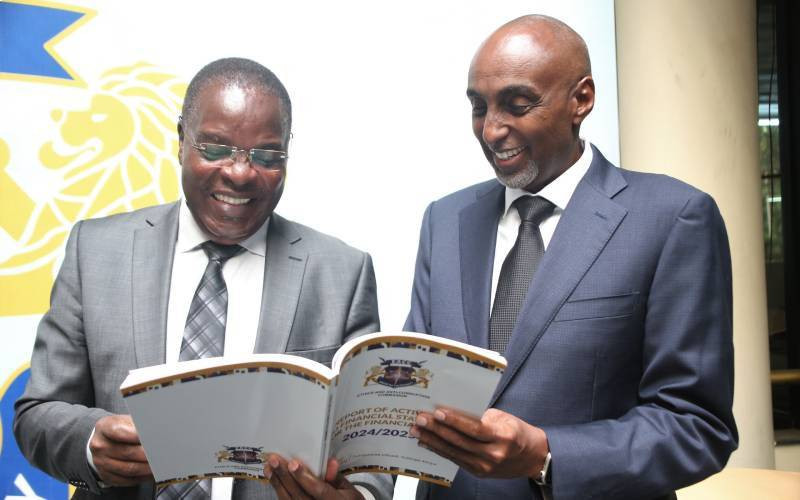
The Ethics and Anti-Corruption Commission now says it will publish the names of candidates who will be seeking elective positions but with questionable integrity.
The commission on Monday said, based on previous experiences where questionable characters end up being elected to public offices, it has partnered with the IEBC in developing criteria for integrity verification.
Speaking during the opening of a workshop for journalists on integrity in leadership and elections in Mombasa, the graft agency Chief Executive Officer Abdi Mohamud said that, just like in the 2017 and 2022 general elections, the reports containing recommendations of persons whom the Commission considers not eligible for elections will be shared with the IEBC.
Mohamud said the commission has no mandate to bar any candidates with integrity questions from contesting for electoral positions; rather, it is a role that falls squarely under IEBC based on its constitutional mandate to register candidates for an election.
Mohamud said the commission only submits its recommendations on the suitability of candidates based on the Constitution and parameters agreed on with IEBC.
He said the commission, however, has a role to play in sensitising the public on the moral and ethical requirements of candidates seeking elections.
“This is a role that the Commission will be embracing in the months leading to the General Election to be held in August 2027,” said Mohamud.
According to him, the commission will soon launch a public campaign aimed at sensitising members of the public on the moral and ethical requirements expected of elected leaders.
“During these campaigns, the Commission will set up report desks to receive complaints from the public relating to ethical violations and corruption and invite members of the public to make any reports on voter bribery, public officers engaging in political campaigns, among other violations,” he said.
Mohamud said in any election year, the commissions receive upwards of 20,000 self-declarations from persons seeking nomination as candidates.
On the other hand, he said the commission has made great strides in weeding out State and public officers that fall short of the moral and ethical requirements expected of leaders.
He noted that one area that the Commission has registered significant success in the last five or so years has been in the investigation of allegations of forged academic certificates in the public sector.
“To date, EACC has conducted investigations into 228 allegations of forgery of academic and professional certificates and has recommended prosecution in 134 files forwarded to the Director of Public Prosecutions,” he said, adding, “As we speak, 60 cases are pending before courts. Out of the 50 concluded cases, 45 resulted in convictions, with 5 acquittals.”
In addition to prosecution, Mohamud said the Commission has recovered Sh41,200,666 acquired on the strength of forged academic and professional certificates.
Sadly, the CEO said some of those who have been investigated and either prosecuted or instituted civil matters against are elected leaders.
Stay informed. Subscribe to our newsletter
“The Commission is prepared to vigorously assess and investigate documents accompanying self-declaration forms to ensure forged or falsified certificates are not used to get clearance to run for office,” he said.
His remarks were echoed by Commissioner Col (Rtd) Alfred Mshimba, who said the Commission will work closely with the IEBC, the NCIC and other investigative agencies to address electoral corruption, violence and other integrity violations and election offences within our respective mandates.
“As we look towards the 2027 General Election, the EACC recognises that enforcement alone cannot deliver the kind of elections and leadership that Kenyans desire. We must also invest in public awareness and encourage participation,” said Mshimba.
Mshimba said in the run-up to the 2017 election, the Commission submitted a list of 87 individuals with unresolved integrity questions to the IEBC but unfortunately, all of them were eventually cleared to contest.
Crime Journalists Association of Kenya (CJAK) Joseph Muraya said media houses and journalists in particular must interrogate promises, follow public resources, expose wrongdoing where evidence exists, and give citizens the context they need to make informed choices.
“Integrity is not an abstract idea. It is reflected in the daily choices made by leaders, institutions and citizens. For us in the media, it is reflected in how we gather facts, tell stories, handle pressure and remain accountable to the public,” he said.
Muraya argued that as the country heads to the 2027 General Election, responsibility for journalists has become even greater.
“Elections can strengthen democracy when citizens have accurate, balanced and useful information. But they can also create an environment where misinformation, propaganda, hate speech and political influence thrive. Our duty as journalists is to help the public separate fact from fiction,” he said.
Muraya called on reporters to resist inducements, intimidation, shortcuts and the temptation to sacrifice accuracy in the race to be first.
Subscribe to our newsletter and stay updated on the latest developments and special offers!