×

The Standard e-Paper
Kenya’s Boldest Voice
 The Standard Group Plc is a
multi-media organization with investments in media platforms spanning newspaper
print operations, television, radio broadcasting, digital and online services. The
Standard Group is recognized as a leading multi-media house in Kenya with a key
influence in matters of national and international interest.
The Standard Group Plc is a
multi-media organization with investments in media platforms spanning newspaper
print operations, television, radio broadcasting, digital and online services. The
Standard Group is recognized as a leading multi-media house in Kenya with a key
influence in matters of national and international interest.

Audio By Vocalize
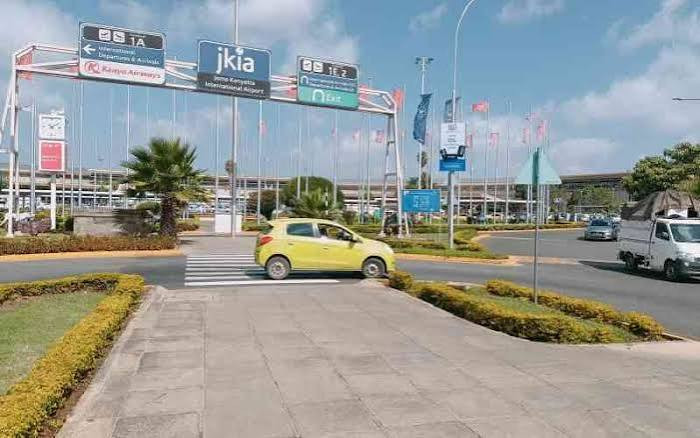
A row over the Kenya Airports Authority (KAA) PLC using private companies to run and charge for parking lots has landed in court.
KAA has Automated Parking Services (APS) Limited as its contractor for major airports including Moi and Kisumu International Airports.
However, Brian Abeid, in his case filed before the High Court, argued that the move to have the private firm charge for parking is illegal, given that the government has a unified payment system through E-citizen.
His lawyer, Toy Onyango, told the court that having an alternative payment method at the airports is contrary to the directive by President William Ruto that all government entities and parastatals ought to shift.
He explained that at the two airports, motorists pay through either the APS parking system or the government-backed digital payment platform.
He insisted that it was impossible to account for the commission and money paid through both accounts.
Onyango argued that APS was contracted by KAA. He pointed out that although his client is not contesting the tendering process, his concern was the post-commercial arrangement.
He observed that at the airports, APS is indicated as the merchant.
However, Onyango claimed that the controversy was that KAA did not invite bidders for commercial management and operation of parking facilities as private concessions or revenue-generating business.
“There is thus an overriding public interest in establishing the beneficiary and settlement accounts applicable to the APS and eCitizen payment channels, legal and constitutional basis upon which any material variation or enlargement of a competitively procured scope was undertaken, and the contractual basis for any commission, deduction, management fee, revenue share or other retention from parking revenue collected,” argued Onyango.
Abeid, in the case, said that he had used both Moi and Kisumu Airports. He further said that he observed that motorists were able to pay for parking through APS.
At the same time, he added that motorists could also use the government-designated 222222 as the alternative payment method.
The court heard that the contract between KAA and APS included the collection of parking fees, from which it would cut its share of the revenue generated.
Stay informed. Subscribe to our newsletter
However, according to him, the advertised contract was to install a parking system.
“Respondents cannot lawfully convert a procurement for supply and installation into a materially broader commercial-management and revenue-collection arrangement after competitive bidding has closed, thereby conferring upon the successful contractor an economic opportunity which was never transparently presented to or competed for by the market,” argued Abeid.
He asserted that the money collected ought to directly move through the government’s channels, should be fully identifiable, traceable, reconcilable and auditable at every stage of collection and settlement.
Abeid stated that despite seeking answers about the tender, KAA remained silent.
He argued the arrangement undermines transparency, genuine price discovery, value for money and public confidence in the integrity of public contracting and is unconstitutional.
“The constitutional concern is therefore one of public accountability: who receives the gross collections, where the monies settle, whether any sums are deducted or retained before remittance, authority for any such deduction, and whether the entirety of the revenue is ultimately reconciled and brought to account by the 2nd respondent (KAA).”
“The use of a private payment or settlement channel cannot lawfully render revenue generated from public assets less transparent, less traceable or less accountable than revenue collected directly by the public entity,” he argued.
Abeid wants the court to declare that the tender did not include management and operation of airport parking facilities.








Subscribe to our newsletter and stay updated on the latest developments and special offers!








 join
join