×

The Standard e-Paper
Join Thousands Daily
 The Standard Group Plc is a
multi-media organization with investments in media platforms spanning newspaper
print operations, television, radio broadcasting, digital and online services. The
Standard Group is recognized as a leading multi-media house in Kenya with a key
influence in matters of national and international interest.
The Standard Group Plc is a
multi-media organization with investments in media platforms spanning newspaper
print operations, television, radio broadcasting, digital and online services. The
Standard Group is recognized as a leading multi-media house in Kenya with a key
influence in matters of national and international interest.

Audio By Vocalize

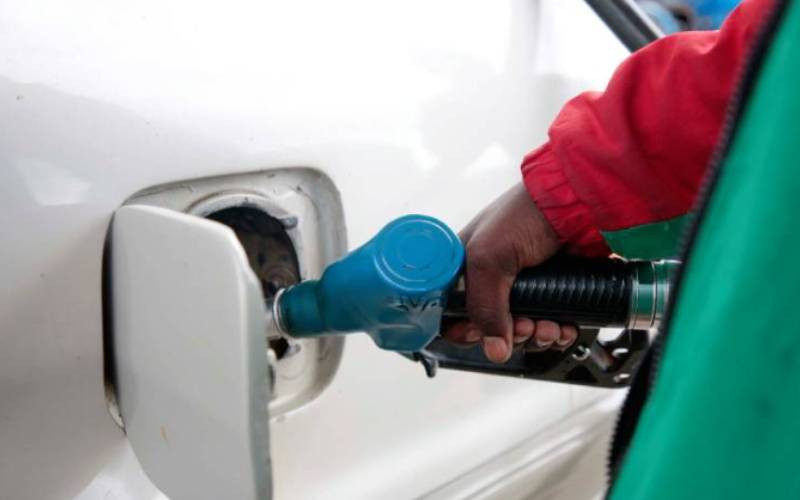
Kenya risks sliding back into an era of widespread fuel adulteration as the government’s heavy subsidy on kerosene opens up a price gap of more than Sh90 per litre with diesel, reviving incentives for rogue dealers to blend the cheaper fuel into transport fuels for huge profits.
This is amid calls for the government to consider redistributing the heavy subsidy it gave to kerosene to cover the other products, which could bring the cost of the three products whose prices are regulated to under Sh200 per litre.
The latest pump price review pushed diesel in Nairobi to a historic Sh242.92 per litre and super petrol to Sh214.25, while kerosene remained at about Sh152.78 under an aggressive subsidy programme aimed at cushioning low-income households.
Industry players now warn that the widening disparity threatens to undo years of reforms, including higher taxes fuel marking programmes, that had largely stamped out the illegal mixing of kerosene with diesel and petrol.
The growing controversy has also exposed a wider debate over Kenya’s fuel subsidy model, with critics questioning why the government chose to channel billions into keeping kerosene artificially cheap instead of easing the cost of diesel, which drives key sectors such as transport, agriculture, and production.
Adulteration fears are in addition to the high sulphur fuel recently permitted by the government, which could also cause costly damage to engines.
Petroleum Outlets Association of Kenya (Poak) chairman Martin Chomba said the Sh90 difference between the retail prices of diesel and kerosene could incentivise unscrupulous dealers to increase diesel volumes using kerosene.
Over the last two pricing cycles, kerosene has been heavily subsidised, with the gap between its price and that of diesel and petrol growing significantly. Over the current cycle, the fuel is subsidised by Sh91 per litre while the subsidy over the April-May cycle stood at Sh89.
In the previous cycle, Kenya's government reduced VAT on fuel to 8 per cent and pumped a Sh6 billion subsidy. Over the current, the government has adopted a similar approach, pumping a Sh5 billion cushion.
“The danger that is looming in the petroleum trade is in the disparity between the price of petrol and diesel in comparison to that of kerosene.
"Kerosene has in the past been used for adulteration. And when you give a price of Sh152 per litre against a price of a diesel Sh243 per litre, what we are likely to start seeing now is the return of adulteration," Chomba said.
“If not checked, we could see a resurgence now that there is a serious incentive because of the price disparity, which would take us back from where we have come from as a country.”
He said the government should have shared the subsidy given to kerosene across all the fuels, which could have seen all three fuels retail at under Sh200 per litre.
This is even as he noted that the high cost of diesel hurts the economy, pushing up the cost of essentials for everyone, which hurts the low-income households more and negates the subsidies given to kerosene.
“It makes a lot of sense in subsidising diesel more than you would subsidise kerosene. The guise that kerosene is used by the common person used to work a while back. But today, even if you look at the numbers in terms of how much kerosene is used in the country, the consumption has been going down as people adopt other cooking fuels,” he said.
Stay informed. Subscribe to our newsletter
“The numbers tell you that more people are using cooking gas than they are using kerosene. It will not hurt to increase the price of kerosene slightly and reduce the price of diesel because you will essentially be subsidising the cost of production and what would have otherwise cost the common person more in terms of buying products in the shop.”
Local consumption of kerosene has, over the years, been declining as the government raised taxes on the product that traditionally enjoyed a low tax regime as the State tried to cushion low income households.
Consumption has gone down to 44,100 metric tonnes in 2025 from a peak of 448,000 tonnes in 2017, according to data by the Kenya National Bureau of Statistics (KNBS).
There was however an increase last year, when kerosene usage rose to 44,100 tonnes from 36,700 tonnes in 2024, an indication of the tough times that Kenyans have been going through.
Cooking gas appears to have been slowly edging out kerosene, with consumption of LPG tripling over the last decade. Kenyans used 475,900 tonnes of cooking gas last year, up from 151,700 tonnes in 2016.
There are also calls to reform the tax and subsidy regimes on petroleum.
Development economist Patrick Muinde has said the government is facing a reality of the tradeoffs it needs to make between complying with conditionalities imposed by donors but also trying to manage cash liquidity projects of the government.
“The cash subsidy has been problematic for compensating oil marketers. The process is prone to a lot of malpractice and corruption,” he said. "The government ends up leaking more compensating oil marketers directly from subsidies."
To address the prices effectively, Muinde said the government should offer subsidies at the tax level.
“Remove taxes from the products themselves and reduce the cost of the product. The government does not have to struggle to collect the taxes and try to figure out how much oil is sold from petrol stations to compensate marketers."
Over the last 10 years, the government has put in place measures to contain adulteration, which had appeared to be getting out of hand in the early 2000s.
At some point, industry estimates suggested that nearly 70 per cent of certain independent petrol stations in rural areas and along transit highways were selling sub-standard fuel, most of which were products blended with kerosene.
The government hiked taxes to bridge the disparity between the prices of kerosene and the other products. These included the anti-adulteration levy at Sh18 per litre in 2018, which was only applied on kerosene. Excise duty on kerosene has also moved from Sh7.21 to Sh11.37, at par with that of diesel.
Epra has also been marking fuel, introducing additives that it says are otherwise harmless but cause the colour of fuel to change when it is blended with kerosene. This is in addition to random testing of products at petrol stations.
“If there is a resurgence of adulteration, there is a huge impact when it comes to vehicle engines. Unfortunately, we do not have the capacity to police everybody within the country to make sure that they are selling what is right to Kenyans.
"We can catch four, five petrol stations, but the number of petrol stations we have within the country and the capacity are not commensurate,” said Chomba.
Matatu operators have expressed suspicion over paraffin being cheaper than diesel, with accusations that it benefits politicians and officials rather than the common mwananchi.
“I would like to ask the government if they have forgotten that diesel drives this economy,” said Rig Owners Association chairman Cornelius Chepsoi. The association brings together drilling contractors in Kenya.
Chepsoi questioned why paraffin has “suddenly” become cheaper than all other fuels.
“How is it possible that paraffin has become the cheapest fuel in the country? Who uses paraffin?” he asked.
Joseph Kamau, a boda boda rider, lamented about the high cost of living and the just increased fuel prices. According to Kamau, the high cost of fuel may push riders to dishonest sources of income.
“Right now, Sh400 will get you roughly one and a half litres of diesel. It doesn’t make me any meaningful profit,” he said, denying claims that boda bodas use paraffin.
Earlier in the year, president William Ruto made controversial remarks alleging that paraffin is used by ordinary Kenyans, among them boda boda riders.
While speaking at Suneka Market in Kisii County on April 15, the President said this was one of the reasons that the government had heavily subsidised kerosene.
“We have made sure that paraffin that is used by our boda boda...that the prices don’t change,” he said.
Inflation in April was 5.6 per cent, making oil prices quite disruptive to the economy.



Subscribe to our newsletter and stay updated on the latest developments and special offers!








 join
join