×

The Standard e-Paper
Home To Bold Columnists
 The Standard Group Plc is a
multi-media organization with investments in media platforms spanning newspaper
print operations, television, radio broadcasting, digital and online services. The
Standard Group is recognized as a leading multi-media house in Kenya with a key
influence in matters of national and international interest.
The Standard Group Plc is a
multi-media organization with investments in media platforms spanning newspaper
print operations, television, radio broadcasting, digital and online services. The
Standard Group is recognized as a leading multi-media house in Kenya with a key
influence in matters of national and international interest.

Audio By Vocalize

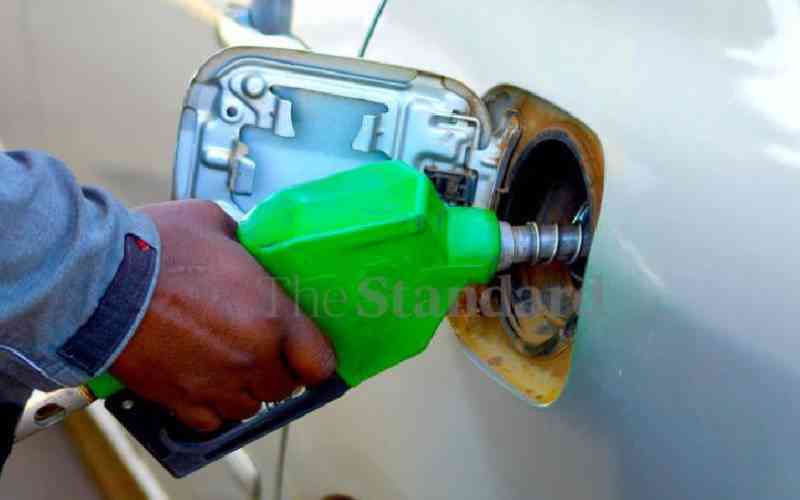
Kiharu MP Ndindi Nyoro has called for immediate measures to cut fuel prices to avert the ripple effect of the hiking fuel prices that will exacerbate the economic burden shouldered by Kenyans.
Nyoro asserted that the government could cushion Kenyans by reducing fuel prices by up to Sh27 per liter proposing a reduction in Value Added Tax (VAT), removal of the Sh7 fuel levy introduced in 2024 and an additional Sh5 billion in subsidies from the Fuel Stabilisation Fund.
priceThe MP said the three per cent reduction of fuel VAT announced on Tuesday by EPRA is ‘underwhelming, insufficient’, urging the government to revert VAT to eight per cent and implement further cuts to ease the burden on consumers.
The Energy and Petroleum Regulatory Authority (EPRA) announced increased fuel prices on Tuesday, where diesel rose by Sh40 a litre, while petrol increased by Sh28.69 per liter resulting in increased retail cost of Sh206 per litre of diesel and Sh206 per super petrol.
To prevent a higher increase, the government announced a subsidy of Sh20 per litre of diesel and Sh4 per super petrol litre.
However, Nyoro argued that the prices could go even lower by reducing the levies further and tapping into the stabilisation fund.
According to Nyoro, reverting to 8 per cent VAT, and a subsequent reduction of the other 8 per cent, spending additional Sh5 billion from the Fund and removing the Sh7 levy introduced in 2014, will translate to a reduction of Sh27 per litre.
The government reduced VAT from 16 per cent to 13 per cent, but the MP demanded a further five per cent reduction, stating that that alone would reduce the price by Sh8 per litre.
“The government also needs to degazette the Sh7 that was added to fuel levy in 2014 and take back the additional 8 per cent levy that was introduced by this regime in 2023,” he said, adding that the government should tax-exempt the oil product to cushion consumers in the mid-term because what the world is facing is not a long-term crisis.
He particularly questioned the management of the fuel pricing system, pointing to a monthly consumption of about 400 million litres and a Sh20 billion stabilisation fund that he says is underutilised.
“The fund has close to Sh20 billion currently, and this is money that has been budgeted for; it is money contributed by Kenyans at the pump,” said the MP.
The MP said the spiralling effects of the price hikes will be borne by consumers, pointing to the already hiked transport charges, possible increase in manufacturing, forex and every other sector.
“By adding the Sh5 billion subsidy, we will greatly reduce the prices of fuel to arrest the many spiral effects that will happen starting today out of the reckless decision made by the government yesterday,” Nyoro added.
“The bigger question we should ask is what is the bigger cost to the economy between the ripple effect of the direct increase of fuel prices and spending more money from the stabilisation fund to make fuel affordable,” Nyoro posed.
Stay informed. Subscribe to our newsletter
“Our economy runs on fuel and oil, and this increase is a matter that needs explanations from government officials because the effects are far-reaching. The margins at which fuel was increased are not about the pump; it is about spiralling within the economy,” said Nyoro.
He called out the government for its reluctance to halt the fuel price shock since the global fuel crisis started following the US-Iran war.
“This is not an emergency that happened to Kenya; the government knew from February 28 that we would have to think about the fuel crisis.
At the same time, Nyoro raised concerns over the government-to-government (G-to-G) fuel deal, alleging a lack of transparency and possible profiteering by senior government officials.
While the arrangement indicated that the fuel imports are done between the Saudi and Kenyan governments, Nyoro claimed that the Kenyans companies importing fuel under the deal are private, hence exposing Kenyans to more exploitation.
“G-to-G is a scandal; it is a scam and a business enterprise for senior government officials. The fuel companies in Saudi Arabia and the UAE countries that are involved in the deal are owned by the government but in Kenya, the people involved are self-interested leaders profiteering themselves at the cost of Kenyans,” he added.
“The ultimate beneficial owners of these companies that handle 75 per cent of the total G-to-G volumes are the same people who added pieces. They would rather make profits and run illegal businesses and let Kenyans shoulder the pain,” Nyoro claimed.
He claimed that some private companies owned by political leaders opted into the G-to-G deal in 2024 after the Gen Z protests

Subscribe to our newsletter and stay updated on the latest developments and special offers!






 join
join