×

The Standard e-Paper
Stay Informed, Even Offline
 The Standard Group Plc is a
multi-media organization with investments in media platforms spanning newspaper
print operations, television, radio broadcasting, digital and online services. The
Standard Group is recognized as a leading multi-media house in Kenya with a key
influence in matters of national and international interest.
The Standard Group Plc is a
multi-media organization with investments in media platforms spanning newspaper
print operations, television, radio broadcasting, digital and online services. The
Standard Group is recognized as a leading multi-media house in Kenya with a key
influence in matters of national and international interest.

Audio By Vocalize
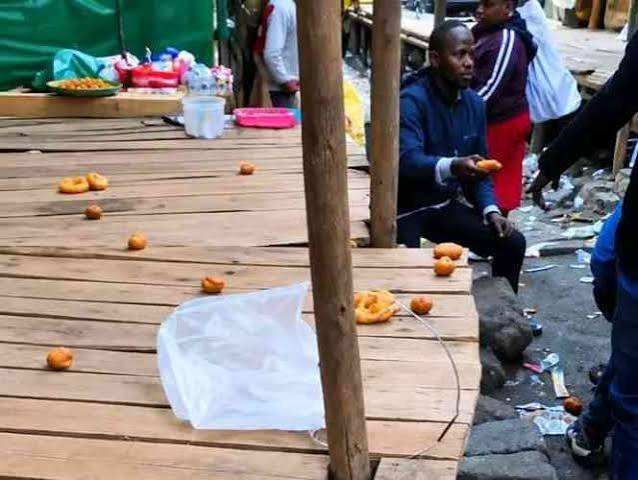
Hawking mandazis and tea or coffee
Before the foreigners, the sale of foodstuff such as tea, coffee and mandazis was not as booming in Kenya.
However, after the uncontrolled entry of Burundians, Congolese, Rwandese and even Ugandans, these foods are now available on streets in the estates, inside matatus and even in the Nairobi Central Business District (CBD).
You will find them, mostly young men hawking them with a flask or two in one hand and, in the other hand, disposable plastic tumblers and a clear plastic bucket with mandazis, with some commonly called KDF brands inside.
What will easily help you know that they are not Kenyans is sometimes their accent, but mostly it is when you pay for their services using mobile money.
The hawking has also raised concerns about the health and environmental risks that consumers expose themselves to, in addition to the disposal of plastic waste from tumblers after use.
The majority handle the mandazis without nylon papers, which have also been banned in the country.
Recently, pictures appeared on social media, showing how the mandazis are prepared in an unclean environment, raising questions about the safety of the food that is hawked.
Hawking groundnuts, bath scrubbers and Uhuru bags
Just like the food items, hawking of roasted groundnuts is not as it is lately.
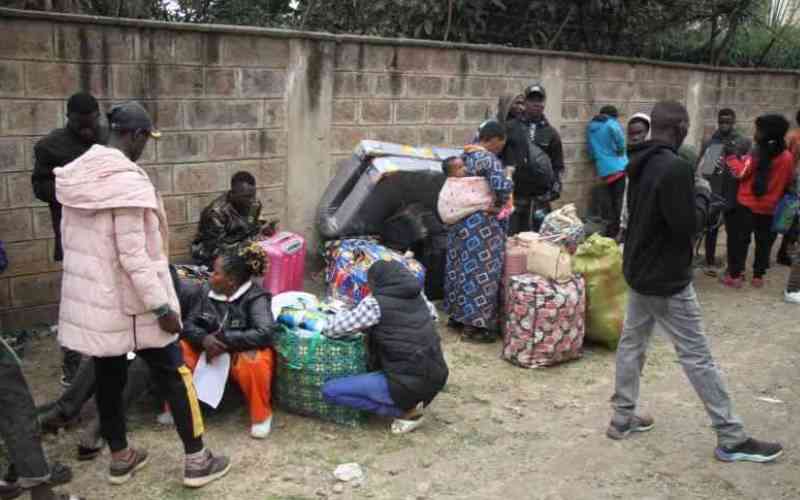
Burundian nationals seek travel documents at their embassy along Dennis Pritt Road, Nairobi, on September 8, 2026. [David Gichuru, Standard]
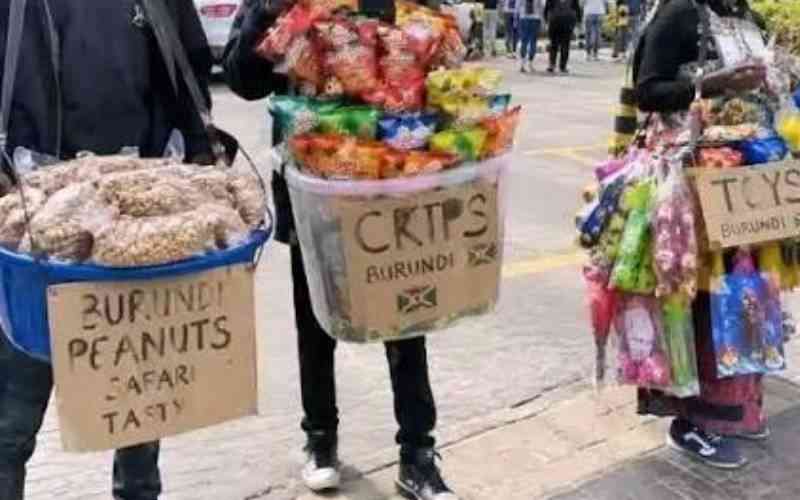
Today, you will get the groundnuts sold along walkways, in traffic jams, and outside train stations like at the Central Railway Station in Nairobi by foreigners.
Unlike Kenyan sellers, those sold by Burundians or Rwandans are shelled, well-packed and sealed in nylon papers. Kenyan sellers are now also adopting the new challenge.
In places like Pipeline Estate in Embakasi, they are now the common hawkers of Uhuru bags, bath and utensil scrubbers for shop owners.
Stay informed. Subscribe to our newsletter
For household utensil businesses, commonly malimali, they replenish their stocks weekly, ensuring continuous business.
According to Florence Gatwiri, a resident of Fedha, there are now many Ugandans hawking ladies' shoes and utensils in the estate.
“They knock on doors to sell utensils and we always know they are foreigners during payment,” she said.
The foreigners are now competing with locals in cooking chapattis and mandazi in low-end estates in Eastlands like Huruma, Pipeline, Umoja, Tasia and Fedha.
For instance, Etiene Nduwimana, a Burundian, owns a roadside stand in Pipeline estate, selling roasted chicken commonly known as KFC Mtaani.
Opening barbershops, salons, manicure and pedicure shops and tailor shops
Today, foreigners own barber shops, salons, pedicure and manicure shops and are excellent in their art, affordable and are mostly preferred by many Kenyan women.
A female colleague regretted it when she heard that her male Burundian, who does her pedicure at Dynamic Mall, which is along Tom Mboya Street in the CBD, closed his shop on Monday.
According to her, she went there but found about three shops, which were owned by Burundians, closed due to fear of attacks.
Along many streets in the CBD and in estates like Mwolem in Eastlands, there are many Congolese who own shops selling clothes in Nairobi.
They deal mostly in Congolese fabrics including lesos, kanga, and kitenge, which are now preferred by Kenyans during events like weddings.
Eric Muhanaiyo, who owns a shop in Mowlem, was a victim when individuals during the weekend tried to break into his shop, according to CCTV footage.
Foreigners are now also available on construction sites
According to Joseph Ouma, a foreman in Nairobi, many are being exploited because they are not highly paid like Kenyans.
“A Burundian can work and be paid as little as Sh300 per day instead of the Sh500 minimum, and this makes them a target for contractors who exploit them at construction sites,” said Ouma.
He added: “This has angered many Kenyan construction workers who blame them for messing up the jobs in terms of poor earnings.”
Boda boda operators
According to Kevin Mubadi, chairman of the Boda Boda Association of Kenya, they have a concern that Burundians have also entered their sector.
“Indeed, there has been a challenge and a concern to us, not that they are taking our members' jobs, but they enter the sector without driving licences since they do not have identification documents and that becomes an issue in case of an accident,” said Mubadi.
He added: “They normally befriend a Kenyan, then they purchase motorbikes on their behalf or some hire from Kenyans and do with it work for like a week so long as they pay at the end of the day.”
Mubadi, who says they should not be deported but pursued to get stay permits, says they are also rowdy and are not willing to join saccos, which are a requirement by the government to ensure accountability.
“They are a group and tend to defend themselves; like Eastleigh, they were disturbing a lot, including making stages everywhere and when you ask them for a licence they become rowdy and they use that as a defensive mechanism,” said Mubadi.
He added: “If the government is ready to give them licences, we have no problem working with them but it should also be careful not to allow many foreigners to come in because they are cheaper since many have no families who depend on them and can therefore accept any amount.”
In the entertainment sector, the Congolese are also there in huge numbers with bands that perform at night in clubs.







Subscribe to our newsletter and stay updated on the latest developments and special offers!







 join
join