×

The Standard e-Paper
Smart Minds Choose Us
 The Standard Group Plc is a
multi-media organization with investments in media platforms spanning newspaper
print operations, television, radio broadcasting, digital and online services. The
Standard Group is recognized as a leading multi-media house in Kenya with a key
influence in matters of national and international interest.
The Standard Group Plc is a
multi-media organization with investments in media platforms spanning newspaper
print operations, television, radio broadcasting, digital and online services. The
Standard Group is recognized as a leading multi-media house in Kenya with a key
influence in matters of national and international interest.

Audio By Vocalize
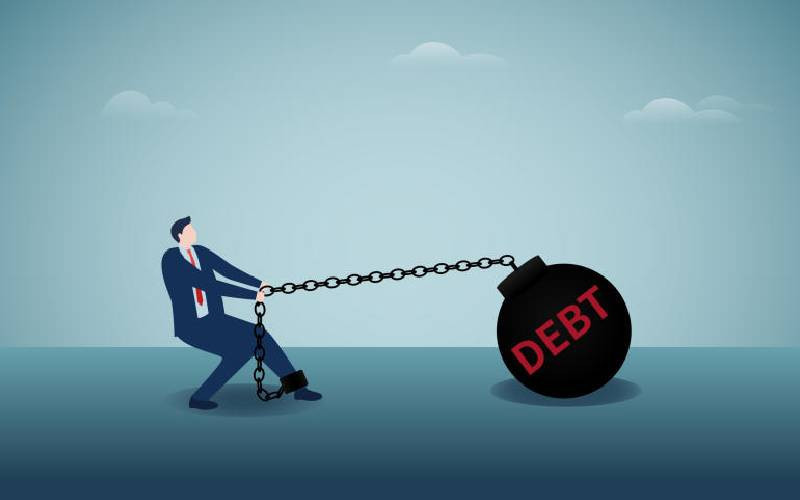
Kenya is borrowing heavily to finance its needs. As of March this year, Kenya’s public debt stood at Sh12.32 trillion, while debt service in the 2024/25 financial year amounted to Sh1.72 trillion.
Every day, we debate where the next billion will come from. But perhaps there is another question is: how much value are we allowing to leak out of our economy?
The focus today is the counterfeit leak. The Anti-Counterfeit Authority (ACA) says Kenya loses more than Sh153 billion annually to counterfeit trade. Its research points to health, agriculture, electronics and automotive products among the affected sectors.
For perspective, Kenya’s health sector has been allocated about Sh167.4 billion in one of the recent budget frameworks. Recovering every shilling lost to counterfeit trade would not eliminate our need to borrow. But the comparison should make us uncomfortable.
Because illicit trade is not some distant problem happening in dark warehouses or at obscure border crossings. It is increasingly part of everyday economic life. And perhaps the most dangerous thing is that we are slowly getting used to it.
We see the cheap spare part. The suspiciously cheap electrical cable. The phone that is far below the normal market price. The construction material whose origin we cannot establish. The medicine being sold outside the proper channels. Sometimes we know. Sometimes we don't.
And sometimes, we simply decide that the price is too good to walk away from. That is where the problem becomes bigger than enforcement.
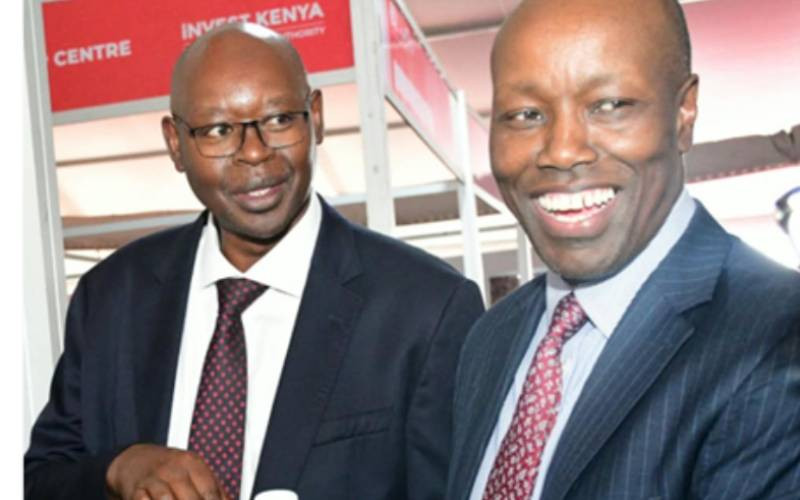
During a recent conversation with Investments, Trade and Industry Cabinet Secretary Lee Kinyanjui on counterfeits, he said illicit trade denies government revenue, hurts legitimate businesses and can ultimately force companies to close.
The government intends to respond through a multisectoral approach, including addressing legal and enforcement gaps. Steps in the right direction.
A counterfeit product not only hurts the company whose brand has been copied. It distorts the entire market. A legitimate manufacturer pays taxes, employs people, meets regulatory requirements, invests in machinery and research, and carries the cost of compliance.
The illicit operator may carry none of those costs. The result is an uneven race. And when legitimate businesses lose enough ground, the consequences eventually reach all of us through lost jobs, reduced investment, lower tax collections and fewer incentives to manufacture locally.
The health implications from illicit medicine can be even more disturbing. Kenya has been strengthening its response to substandard and falsified medical products, including tighter surveillance, recalls, alerts and action against non-compliant pharmaceutical premises.
Between 2021 and 2025, the Pharmacy and Poisons Board recorded 1,413 product quality complaints, coordinated 99 recalls and issued 18 public alerts on suspected falsified medicines. Since January 2025, it has undertaken another 58 recalls and issued 14 rapid alerts.
More than 200 non-compliant pharmaceutical premises have also been closed. But since it is still a work in progress, the big and deadly question that still lingers is: can we trust the products entering our homes, hospitals, cars, businesses and farms?
Stay informed. Subscribe to our newsletter
Because behind the statistics are people. People who have lost their lives and sight after consuming illicit alcohol. People who take medicine believing it will make them better, only to discover that what they swallowed was substandard or falsified.
Kenya's State of National Security report links illicit alcohol to deaths, blindness and other illnesses, while the Ministry of Health says falsified and substandard medical products can contribute to treatment failure and preventable deaths.
So this is not just about counterfeit brands. It can be about whether someone goes home alive. But there is another uncomfortable side to this conversation.
The consumer. We often talk about illicit trade as though there are only criminals on one side and innocent consumers on the other. Reality is more complicated.
The ACA says affordability and ease of access are major drivers of counterfeit purchases, and its research found that some consumers knowingly buy fakes because they are cheaper.
We cannot ignore the economics behind that decision. People are under financial pressure. Businesses are trying to survive. Families are looking for ways to stretch every shilling. But there’s an economic story behind it.
If a genuine manufacturer loses a sale, an employee may eventually lose income. If a local company cannot compete with illicit imports, investment can disappear. If the government loses revenue, the rest of us eventually face the consequences through fewer resources for public services.
This is why the fight against illicit trade cannot be left to enforcement agencies alone. It requires all of us to work together, make legitimate products easier to identify and, where possible, more accessible and affordable.
And perhaps we can learn from countries that have treated counterfeiting as more than an occasional crackdown.
South Korea, for example, reported that its enforcement actions in 2025 resulted in 388 suspects being criminally charged and about 143,000 counterfeit items seized, with an estimated genuine-market value of KRW432.6 billion or Sh40 billion.
The lesson is not that Kenya should copy South Korea wholesale. It is that sustained enforcement, technology, intelligence and cooperation can make the fight against illicit trade systematic rather than episodic.
There is also a bigger conversation here about the kind of economy we want to build. CS Kinyanjui made a strong case for increasing local manufacturing and reducing unnecessary dependence on imports.
He argues that Kenya should import machinery, technology and things we cannot efficiently produce, while progressively building the capacity to manufacture more of what we consume.
That conversation is directly connected to illicit trade. You cannot build a strong manufacturing economy if legitimate manufacturers are constantly being undercut by products that avoid the rules.
You cannot attract sustainable investment into production if the market rewards those who evade compliance. And you cannot build consumer trust if authenticity becomes difficult to distinguish from imitation.
But ultimately, this is also a question of consciousness. What kind of society are we becoming when the first question we ask is not “Is this genuine?” but “How cheap is it?” What happens when we stop being surprised by fake products? When we stop reporting them? When we stop asking where they came from? When we begin to see them as simply another way of doing business?
That is when illicit becomes normal.
And when illicit becomes normal, the damage goes far beyond the product being copied.
It changes the rules of the marketplace. It punishes those who play by the rules. It weakens trust. It discourages investment. And ultimately, it makes all of us poorer.
Perhaps part of the money we keep looking for is already in our economy, leaking through the cracks....and perhaps the first question is not always who will lend us more. It is: what are we willing to stop losing?
The writer's business journalist and host of The Trading Bell on KTN



Subscribe to our newsletter and stay updated on the latest developments and special offers!






 join
join