×

The Standard e-Paper
Stay Informed, Even Offline
 The Standard Group Plc is a
multi-media organization with investments in media platforms spanning newspaper
print operations, television, radio broadcasting, digital and online services. The
Standard Group is recognized as a leading multi-media house in Kenya with a key
influence in matters of national and international interest.
The Standard Group Plc is a
multi-media organization with investments in media platforms spanning newspaper
print operations, television, radio broadcasting, digital and online services. The
Standard Group is recognized as a leading multi-media house in Kenya with a key
influence in matters of national and international interest.

Audio By Vocalize
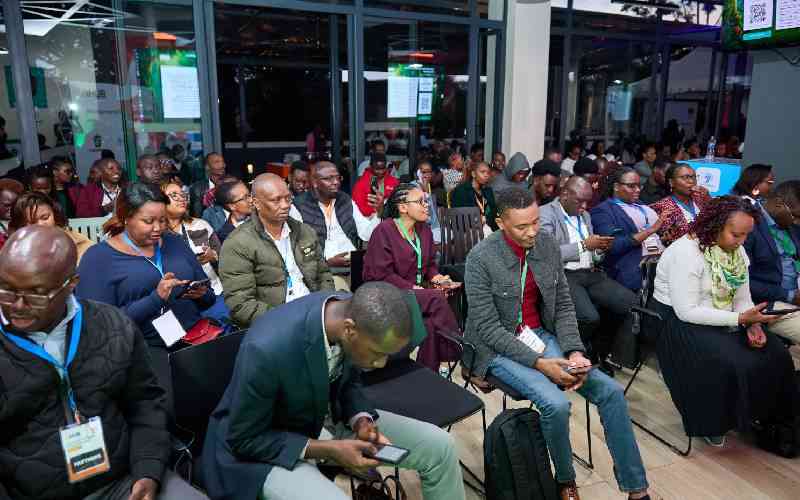
Mastercard Foundation EdTech fellowship programme cohort 4 kickoff event. [Nanjinia Wamuswa, Standard]
Twelve Kenyan education technology (EdTech) startups have secured a major funding boost under the fourth cohort of the Mastercard Foundation EdTech Fellowship at iHub, in a move expected to accelerate digital learning innovations targeting underserved communities while strengthening the country’s growing innovation ecosystem.
Each startup will receive $100,000 (Sh12.9 million) in equity-free funding, alongside an 18-month programme offering business advisory, mentorship, investor linkages and opportunities to pilot their solutions with governments, schools and development partners.
The funding comes at a time when education technology startups continue to face difficulties attracting private investment despite growing demand for digital learning solutions across Africa.
Speaking during the launch of the fourth cohort in Nairobi, iHub Managing Partner Nissi Madu said the programme has shifted its focus to innovations that address gaps in access to quality education among learners who have historically been left behind.
“The EdTech Fellowship Programme is focused on supporting innovators building solutions that drive access to quality education and improve learning outcomes for young learners across Kenya and across Africa,” Madu said.
She noted that the fellowship has already supported 36 startups through its first three cohorts, with the businesses collectively reaching more than 700,000 learners across the continent.
Africa’s prosperity
However, Madu noted that the latest cohort was intentionally designed to tackle inequalities that continue to exclude many learners from benefiting from technology-enabled education.
“We realised that when we are talking about Africa’s prosperity and improving learning outcomes, we need to make sure that we are leaving no learners behind,” she said.
According to Madu, the 12 selected startups are developing solutions focused on four priority areas: learners living with disabilities, refugees and displaced populations, learners in rural and underserved communities, young girls and women, as well as education and skills data.
“These represent areas where learners have historically been excluded from EdTech solutions. Inclusion has to be at the centre of innovation, not an afterthought,” she stated.
Beyond financing, Madu said the fellowship seeks to address one of the biggest challenges facing education technology businesses, that is, scaling viable business models in a sector that has traditionally attracted less venture capital than other technology segments.
“Historically, EdTech has received very little investment compared to other sectors. Part of what the 18-month programme does is help founders generate evidence that their solutions improve learning outcomes while building sustainable business models that investors, governments and schools can support,” she said.
Stay informed. Subscribe to our newsletter
Madu noted that startups cannot scale in isolation, calling for greater collaboration between governments, investors, education institutions and development partners.
“We’re talking about millions of learners who need these solutions. The startups cannot do it alone, and neither can iHub. We need partnerships that will help pilot, adopt and scale these innovations,” she said.
Among the startups selected is Deaf Outreach Programme, whose founder Anne Njoki is developing a digital library that translates Kenya’s school curriculum into Kenyan Sign Language for deaf learners.
Njoki said the idea was born after years of working in schools for deaf children, where she observed consistently poor academic performance despite learners attending school.
“We realised the children were in class, but they were not learning. Most learning materials are presented in text or voice, but not in sign language. So children are being taught in a language they cannot fully understand. We cannot expect better performance without providing accessible learning materials,” she said. The organisation has developed the Deaf Digital Library, available both online and offline, allowing schools without internet connectivity to access curriculum content translated into sign language.
Through the fellowship, Njoki hopes to secure accreditation for the content through the Kenya Institute of Curriculum Development (KICD), paving the way for nationwide adoption in schools. “Quality education means more than placing a child in the classroom. It also means ensuring that while they are there, they are actually learning,” she said.
Informal settlements
Another startup, Gwiji for Women, is using technology to improve livelihoods for women working as domestic cleaners in informal settlements.
Founder and Chief Executive Officer, Elizabeth Mwangi, said she left a career in architecture to establish the platform after witnessing the economic struggles experienced by women in low-income communities where she grew up. “I saw women sitting outside every day waiting for work, yet many potential clients didn’t know where to find them,” she said.
The platform combines digital job matching with skills training, professional certification and safety measures to improve both workers’ incomes and service quality.
Mwangi said many women previously relied on trial and error because they lacked formal training.
“When clients pay for a service, they expect value. We therefore train the women so they become more confident, more professional and are able to attract repeat customers,” she said.
The application also incorporates safety features, including emergency alerts and worker vetting, while guaranteeing a minimum pay rate for jobs secured through the platform.
She said joining the fellowship would enable the company to digitise its training programmes and reach significantly more women across the country.
“Without technology, we can only train a limited number of women physically. Through the fellowship, we’ll be able to transition fully to an EdTech platform and empower many more women.”







Subscribe to our newsletter and stay updated on the latest developments and special offers!









 join
join