Audio By Vocalize
The pertinent question at the 13th session of the World Urban Forum, being held in Baku, Azerbaijan, has not been if housing is important, but the justification that the global economy is hanging in the balance on its success.
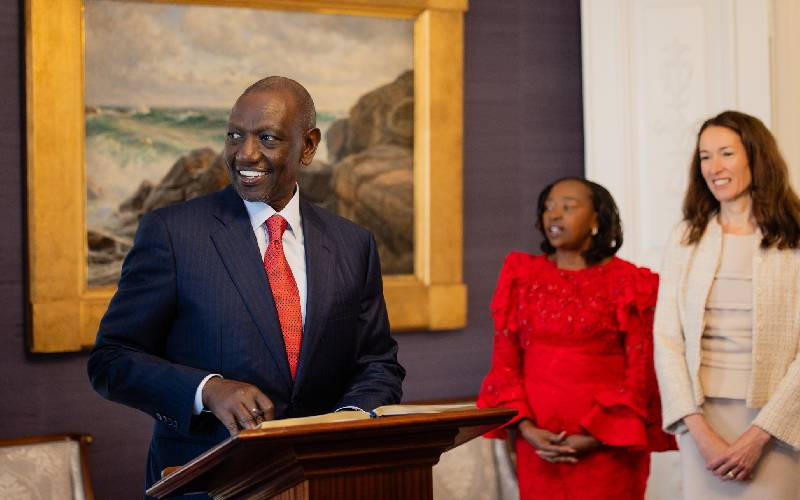
The major push has been on how to finance housing on a huge scale, a voice that Kenya echoed through President William Ruto and Lands, Public Works, Housing and Urban Development Cabinet Secretary Alice Wahome.

Experts tabled evidence as governments petitioned their cases detailing how the success of housing is now the determinant of whether their economies will prevail.
In Europe, for example, it was revealed at one of the sessions that individuals are leaving home at the age of 30 years due to housing prices.
In Africa, where Kenya falls, the increasing job opportunities in the urban centres are the reason why informal settlements keep on growing.
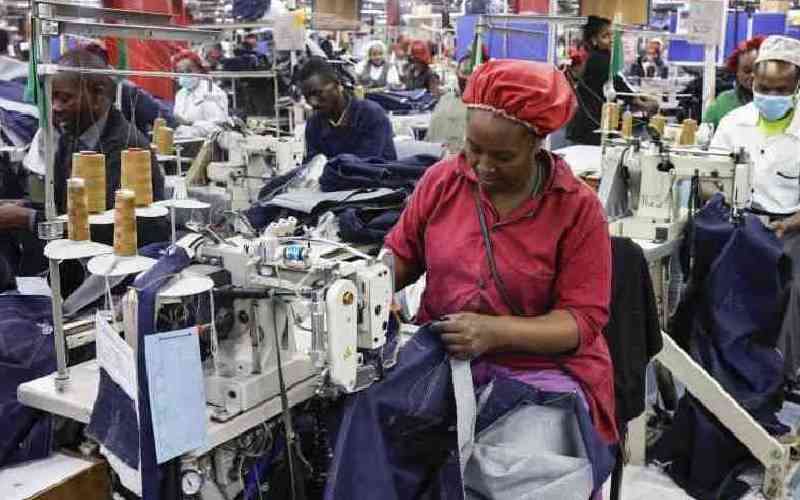
Economies are then facing a paradox, where jobs exist, there is a housing shortage. And for jobs to grow, in some economies like Kenya, there is a need for more housing projects.
The current global housing situation, characterised by homelessness, bulging informal settlements, shortage of units, and a shaky economy, has been described as the perfect storm. That if utilised well, the economy would not only stabilise but also grow.
The UN-Habitat Director - Regional Programme Division, Patrick Canagasingham, said across every region in the world, the housing discourse has moved from the margins to the centre of political, economic and social concern.
“In many countries, housing affordability is now shaping elections, not just in developing countries but also in developed and Organisation for Economic Co-operation and Development (OECD) countries as well. In cities, it is determining whether workers, young people and the vulnerable are being impacted," he says.
He said that when you take issues related to housing, such as equality, informality, and infrastructure gaps, it always circles back into housing.
Canagasingham said globally, housing systems are dictating productivity, migration, public finance and economic resilience. “Housing is no longer just a social sector issue; it is becoming a strategic system issue," he says.
And since it is a systems issue, it requires a coalition-based response. "Why, no single institution or sector can solve the complexity of the global housing crisis on its own," he says.
He observes that the national government cannot do it without partnership with the global government or without participation of the private sector and civil societies.
“For too long, housing has been treated as an outcome of development, but increasingly we are beginning to understand that housing actually is an enabler of development," said Canagasingham.
Stay informed. Subscribe to our newsletter
He said the decisions made on housing shape land, transport systems, energy demand, and emissions, among other aspects of development.
He stated that housing will determine if climate response succeeds, whether urban economies remain competitive, if demographic transition can be managed or if social cohesion will hold.
“This is why housing must sit at the centre of a global coalition. It is not besides climate discussions but a critical part of it, not just a secondary economic policy," he said.
Ming Zhang, World Bank Group's Global Director for Urban, Subnational Finance, Tourism and Disaster Management, noted that housing has been repositioned as a critical sector to grow the job market for economies.
"Our study shows about 15 per cent of global gross domestic product (GDP) is related to housing investment and consumption, so that translates into jobs," he said during a panel discussion at the forum.
He said that it is no longer about just providing houses, saying that the location determines access to jobs. "A lot of people cannot access jobs because they cannot afford the housing that is close to the jobs," he explained.
Zhang said the key issue today is how to improve policies that can increase financing to the sector, which will then improve the supply of units.
He stated that governments should look into how to use the limited multilateral funding to mobilise public sector financing.
This is the strategy Kenya is deploying in order to materialise the 200,000 annual housing units target against a newly imposed levy that collects less than Sh100 billion every year.
Apart from the 200,000 units required annually, Kenya has a shortage of two million units. The budget to fix this shortage is Sh400 billion annually.
President William Ruto, who spoke at the opening of the forum on Monday, said by the end of this year, the government will make units available for 50,000 new homeowners.
Some 8,000 keys have already been handed over. In the pipeline, he said, Kenya has 700,000 units at different stages of completion. "As a result, we have employed 640,000 young people, masons, architects, quantity surveyors - and we are on the way to hiring one million in the short-term," he said.
Somalia Ambassador to Kenya Jabril Ibrahim Abdulle, who spoke at the panel discussion, said the question of housing has become critical for the future of humanity.
“Across the continent, cities are expanding faster than the systems can respond,” he said.
He explained that families are searching not only for a roof over their heads but also dignity, security, opportunity and belonging.
“Global housing challenge has become one of the defining tests of leadership,” he said. "Around the world, we have seen what collaboration can achieve in Rwanda, Kenya, Azerbaijan and other cities."
Abdulle said housing is no longer a sectoral issue and must be understood as a stability, prosperity and human dignity issue.
"The future of cities will not be determined by the infrastructure and beautiful styles, it will be determined by whether people can access opportunities," he said.