×
App Icon
The Standard e-Paper
Join Thousands of Readers
★★★★ - on Play Store
Download Now

Seed-sharing ban ends, bringing new dawn for women's group

The government introduced the Seeds and Plant Varieties Act, which criminalises the saving, exchange and sale of traditional seeds by small-scale farmers. [Courtesy]

After years of playing hide-and-seek for fear of arrest and prosecution, a group of farmers is now preparing to cash in on indigenous seeds.

The women-owned Kabudi-Agro Community Seed Bank, located in Nyakach Sub-County of Kisumu County, had previously avoided selling indigenous seeds for fear of being labelled criminals.


Yet these seeds are vital to Kenyans, especially small-scale farmers, because they are more resilient to drought, pests and diseases, and they provide access to diverse crop varieties and nutritious foods.


The government introduced the Seeds and Plant Varieties Act, which criminalises the saving, exchange and sale of traditional seeds by small-scale farmers. The law was enacted in 1973 and later amended in 2012 and 2016.

Because of this, Evalyne Adhiambo, the chairlady of the seed bank, feared the risk of a prison term of up to two years or a fine of up to Sh1 million under the Act.

She says they have collected, saved and conserved a wide range of indigenous seeds with multiple varieties in the seed bank.

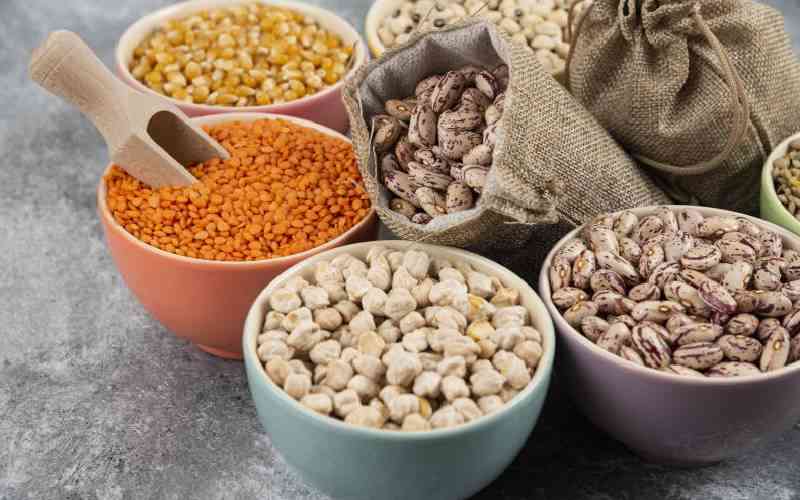
The collection includes eight varieties of maize, 18 varieties of sorghum, seven varieties of finger millet, 15 varieties of traditional leafy vegetables and 17 varieties of beans.

Others include five varieties of groundnuts, as well as bananas, sesame, sunflower, fodder crops, tree forages, and tuber crops such as sweet potatoes and cassava, which are grown in farmers’ fields.

“Hundreds of small-scale farmers within the sub-county and beyond knew the group had abundant indigenous seeds and sought them out, but we could not sell the seeds to them,” Adhiambo says.

Realising the challenges, especially during the planting season, when many farmers could not access or afford costly commercial seeds, the group devised alternative ways to provide farmers with seeds.

She says: “We resorted to using terms like ‘gift’ or ‘exchange’ to avoid conflict with the government.”

Lady luck finally smiled on Adhiambo, her group and millions of small-scale farmers across Kenya when, on November 27, the High Court in Machakos declared unconstitutional sections of the seed law that barred farmers from saving, sharing and selling indigenous seeds.

The ruling affirmed that farmer-managed seed systems are a protected right, not a criminal activity.

The court also struck down provisions that granted sweeping powers to seed inspectors to raid community seed banks and seize seeds, restoring seed autonomy to millions of small-scale farmers in Kenya.

Adhiambo says the Act has held them hostage for a long time. With the law now out of the way, the group plans to invest more in indigenous seed enterprises, partner with companies and produce seeds on a large scale for commercial purposes.

It has also begun the Kenya Bureau of Standards (Kebs) certification process.

The seed bank, currently serving 108 community members, was established in 2020 and officially launched in 2021 with support from the Alliance of Bioversity International and CIAT under the Multifunctional Landscapes Program.

The Kenya Industrial Research and Development Institute (KIRDI) trained group members.

Dr Carlo Fadda, the research lead on Biodiversity for Food and Agriculture at the Alliance of Bioversity International and CIAT, says although the court’s decision now allows farmers to legally use their own seeds, there’s need for a new seed law that recognises and enables farmers and community seed banks to sell seeds legally.

“The ruling has enormous potential to strengthen food sovereignty. It allows farmers to choose what they grow and eat, something previously undermined by policies that denied the legitimacy of their seeds,” he says.

The government argues that the law is meant to prevent the circulation of low-quality seeds. However, Dr Fadda explains that their organisation trains farmers to produce high-quality, disease-free and viable seeds.

“The seeds farmers produce meet the highest standards. They are not certified in Kenya simply because no legal framework exists for such certification,” he explains.

He emphasises that existing seed banks, which serve a broad network of farmers, have the potential to significantly improve livelihoods.

Adhiambo explains that, beyond seeds, the group also produces bio-pesticides and bio-fertilisers, meant for organic farming.

She adds that, apart from selling, the group also loans indigenous seeds.

“This seed loaning ensures communities have enough seeds and easy access. When a farmer cannot buy seeds, or when the market is far, we provide seeds as a loan. For example, if we give 1kg, the farmer returns 2kg after harvest. This practice helps us multiply seeds, especially because we conserve many different varieties that we cannot multiply alone,” Adhiambo explains.

The group conducts regular germination tests. If fewer than eight out of ten seeds germinate, the seed is considered non-viable.

They train farmers on seed conservation and regularly visit their farms to monitor how seeds are performing.

The group’s quality assurance officer ensures that all seeds entering the bank are of high quality, free from pests and diseases, undamaged and clean.

Any damaged seeds are repurposed as grain for value addition. Some of the value-added products from sorghum, millet, cassava and vegetables include different types of composite flour for porridge designed for babies, adults (fermented and non-fermented), and a special porridge for people experiencing low libido, for both men and women.

The group also sells dried vegetables and has drying machinery, winnowing or cleaning and threshing.

They use both traditional and modern preservation methods, including ash, crushed bricks, airtight jars, and zeolite beads, which absorb moisture.

Despite indigenous seeds being drought-tolerant, Adhiambo says they can still fail under severe drought; this remains the group’s main challenge.

The chairlady now calls on the government for a clear strategy on how the group can register or certify their seeds so they can sell them at full value. Selling them as grain does not generate enough profit.