×

The Standard e-Paper
Stay Informed, Even Offline
 The Standard Group Plc is a
multi-media organization with investments in media platforms spanning newspaper
print operations, television, radio broadcasting, digital and online services. The
Standard Group is recognized as a leading multi-media house in Kenya with a key
influence in matters of national and international interest.

Audio By Vocalize
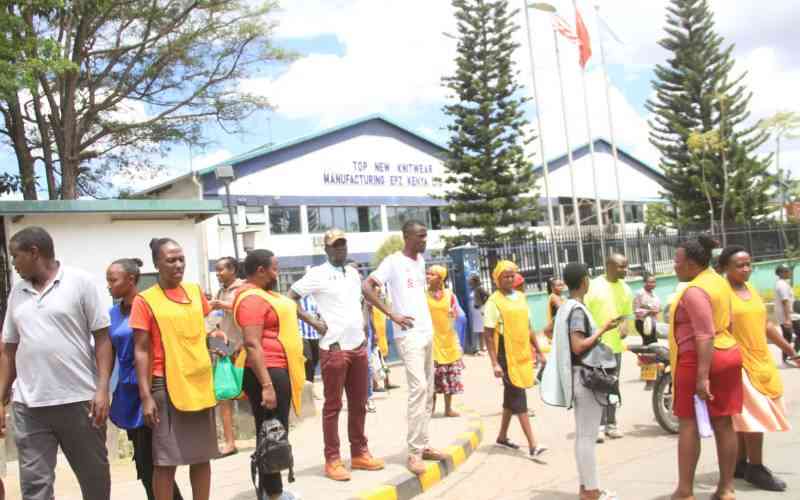
Drama unfolded at the Athi River-based Export Processing Zone (EPZ) after senior government labour officials were allegedly denied entry into a textile manufacturing factory where workers have raised concerns over alleged unfair labour practices, low wages and wrongful dismissal.
The officials from the Ministry of Labour had visited Top New Knitwear, accompanied by Tailors and Textile Workers Union (TTWU) Secretary-General Rev. Joel Chebii, in an attempt to engage the factory's management and address grievances raised by employees.
However, their efforts to access the premises and meet hundreds of workers reportedly hit a snag after the management allegedly locked them out, sparking tension between the union officials and the factory's leadership.
The visit was intended to provide an opportunity for the labour officers to hear directly from workers who claim they have been subjected to unfavourable working conditions, unfair termination and inadequate pay.
The incident has raised questions about cooperation between employers, workers' representatives and government officials mandated to enforce labour laws and protect employees' rights.
According to the union, previous attempts to engage the factory's management over the workers' grievances had failed to yield meaningful results, prompting the involvement of labour officials.
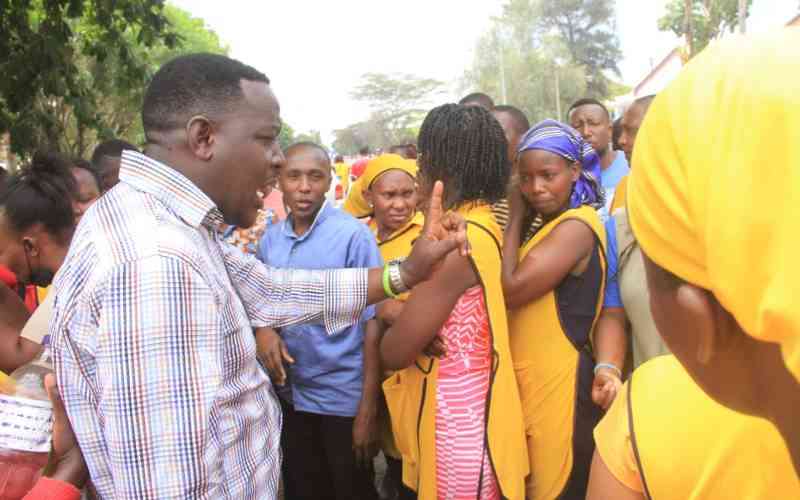
Speaking outside the factory, Chebii expressed shock at the alleged denial of entry, saying the officers had identified themselves but were still unable to access the premises.
"We are very shocked to see senior government officials and labour officers being denied entry to this particular factory, even after identifying ourselves," said Chebii.
He accused the management of failing to address employees' concerns and alleged that some workers had been dismissed without receiving their terminal dues.
The union secretary-general maintained that the visit was not intended to create confrontation but to establish dialogue between the workers and their employer and seek solutions to the reported grievances.
Chebii further alleged that one of the managers claimed he was too busy to meet the delegation because he was expected to meet State House officials.
"He said he was busy going to meet State House officials and therefore had no time to see us," Chebii claimed.
The union official also alleged that the management had invoked its connections with State House to intimidate those seeking to defend workers' rights.
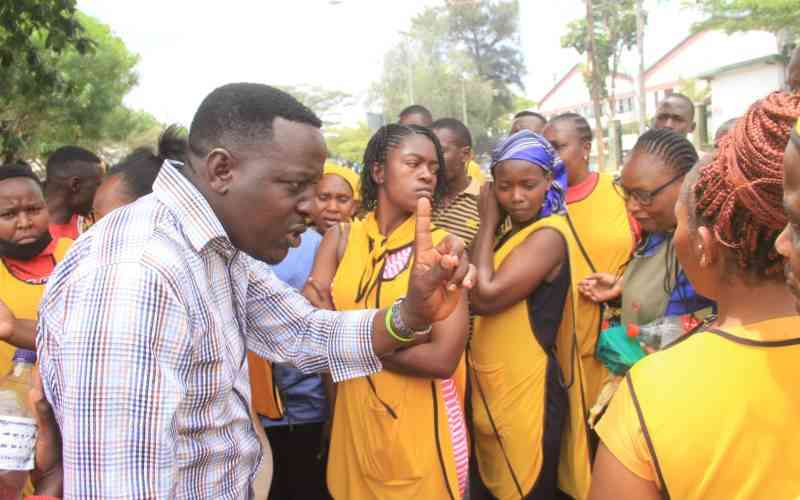
"They are intimidating us, saying they have people in State House, and we are also telling them that we are here to defend the rights of our workers," he added.
The allegations could not be independently verified, and the factory management's response was not available at the time of publication.
Stay informed. Subscribe to our newsletter
The labour officials were reportedly forced to wait for several hours before they could address workers around lunchtime, prolonging the standoff outside the premises.
For the employees, the visit presented an opportunity to air grievances that they say have persisted for some time, with some workers recounting their experiences at the factory.
Among them was Faith Onyoso, who said she had worked at the textile manufacturing firm since 2012 before she was dismissed without being paid her dues.
Onyoso alleged that her dismissal was linked to her involvement in efforts to champion workers' rights, claiming that her advocacy had placed her at odds with the management.
"I have been working here for many years. The management has now dismissed me for engaging myself in fighting for the rights of the workers. I just want them to pay my dues," said Onyoso.
Her case, she said, reflected the challenges faced by employees who seek to raise concerns about their treatment at the workplace.
The union has accused the factory's management of unfairly terminating workers and failing to settle outstanding payments, calling for intervention by the relevant government agencies.
Chebii said the union would continue pushing for the protection of employees, insisting that workers should not be intimidated or victimised for exercising their rights or seeking assistance from labour authorities.
The dispute comes amid continuing concerns over working conditions, wages and job security in labour-intensive manufacturing industries, where employees' livelihoods depend on fair employment practices and the timely settlement of their dues.
Labour officers are mandated to investigate workplace complaints, facilitate compliance with employment laws and help resolve disputes between employers and employees.
The union is now seeking an opportunity for the affected workers to present their grievances and for the management to address the allegations surrounding dismissals, wages and terminal benefits.
The standoff at Top New Knitwear also highlights the importance of cooperation between employers and labour authorities in resolving workplace disputes through established legal and administrative channels.
Workers and their representatives are hoping that the intervention will lead to meaningful engagement with the management and a resolution of the outstanding complaints.
Efforts to obtain a response from Top New Knitwear management on the allegations were unsuccessful by the time of going to press.


Subscribe to our newsletter and stay updated on the latest developments and special offers!