×

The Standard e-Paper
Fearless, Trusted News
 The Standard Group Plc is a
multi-media organization with investments in media platforms spanning newspaper
print operations, television, radio broadcasting, digital and online services. The
Standard Group is recognized as a leading multi-media house in Kenya with a key
influence in matters of national and international interest.
The Standard Group Plc is a
multi-media organization with investments in media platforms spanning newspaper
print operations, television, radio broadcasting, digital and online services. The
Standard Group is recognized as a leading multi-media house in Kenya with a key
influence in matters of national and international interest.

Audio By Vocalize
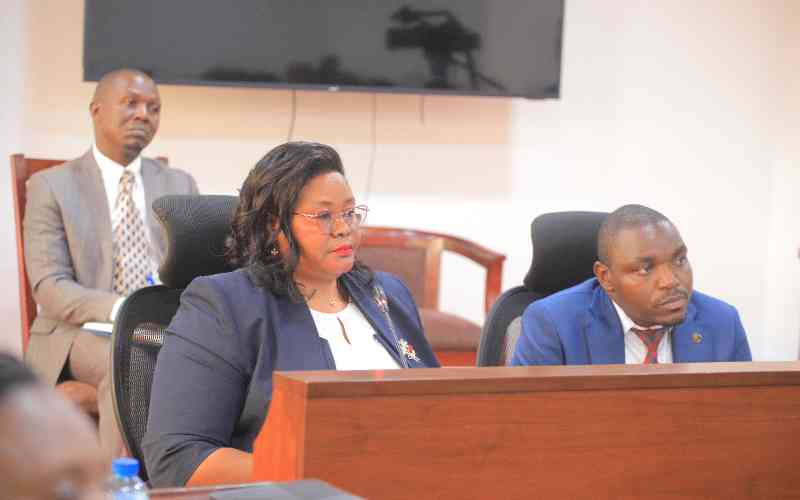
Parliament’s scrutiny of the Auditor-General’s report on public secondary schools has exposed inconsistencies in capitation funding, student enrolment figures and the National Education Management Information System (NEMIS).
The National Assembly Public Investments Committee on Governance and Education has raised concerns over the impact of funding shortfalls on school operations and called for discussions with Ministry of Education officials to address the challenges.
The committee is also exploring whether the secondary school fee structure should be reviewed amid concerns that current capitation is insufficient to meet rising operational costs.
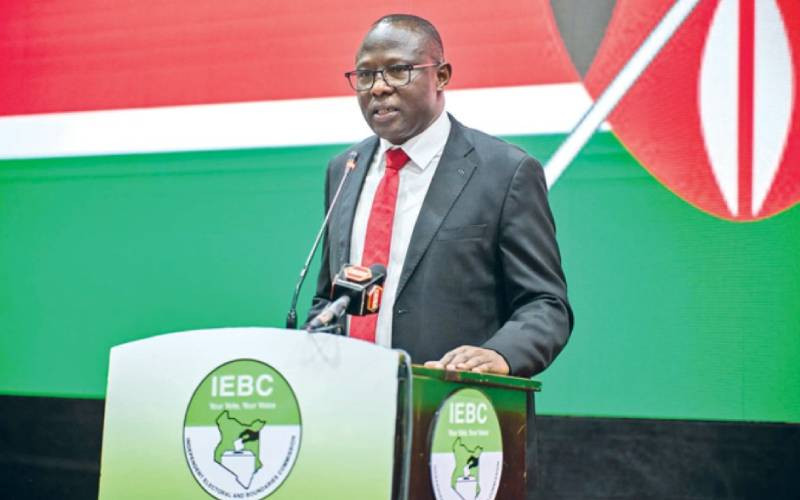
Chaired by Luanda MP Dick Maungu, the committee raised the concerns after the Auditor-General’s report showed that several national schools (C1) had sought additional fees from parents above the approved Sh53,000 annual amount, citing rising costs and inflation.
MPs also questioned disparities between capitation disbursements and the actual number of students in schools, which principals said had contributed to underfunding.
For the first time, administrators of national schools appeared before a parliamentary committee to respond to audit queries, with several saying discrepancies between NEMIS figures and actual school records had affected the amount of capitation they received.
Chief principals from Alliance High School, Alliance Girls, Bishop Gatimu Ngandu Girls, Limuru Girls, Mang’u High, Kenya High School, Pangani Girls and Kabare Girls, among others, said they had experienced difficulties validating learner data on NEMIS.
They said capitation received by their schools did not cover all students, with principals reporting that they receive less than the Sh22,244 expected per learner annually. The amount, they said, averages about Sh15,000.
Schools defend additional fees
During the committee’s examination of Alliance High School’s audit report, the Auditor-General flagged the irregular increase in school fees, including Sh17.6 million collected from parents.
“The school charged fees of Sh68,554 whereas the fees as per the Ministry’s guideline is Sh53,554 and the school thus raised fees by Sh15,000 per student annually contrary to Regulation 44 of Basic Education Regulation 2015, which states that no public school or institution shall issue alternative fee structure other than that approved by the Cabinet Secretary,” the auditor read.
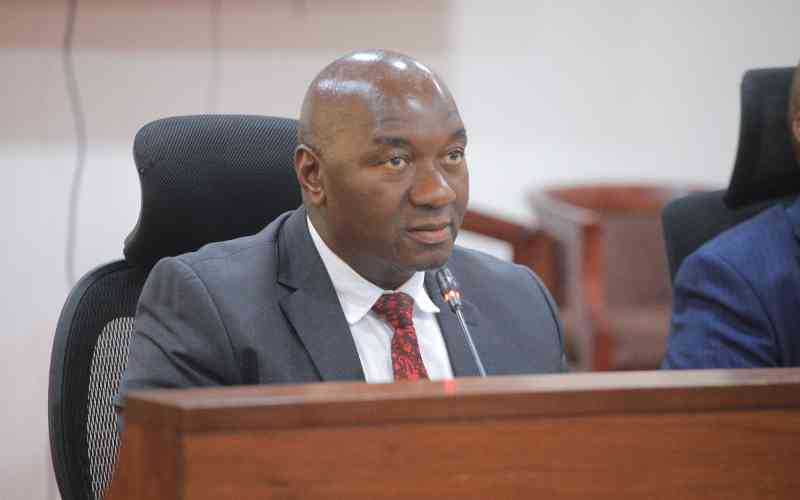
Alliance High School Chief Principal David Kamau admitted that the school had sought alternative funding but said the initiative came from parents.
He said the approved Sh53,000 fee was insufficient to sustain the school’s budget amid rising costs and expectations of maintaining the institution’s standards.
“We have a certain lifestyle we have to maintain and that is why parents came in – in fact it was their idea – and asked us to maintain that. They came in and suggested they can do a budget support so that we maintain the same standards. For us, to acquire the results, we have to do a lot of activities to make sure we give a holistic education associated with the school over the years,” he explained.
Stay informed. Subscribe to our newsletter
“Parents approve that at an Annual General Meeting and we write to the Ministry but that letter of authority has never been granted. We have followed the process to the letter in terms of seeking approval for extra levies from parents,” he added.
The audit also flagged fee arrears in almost all the schools, with Alliance High School reporting arrears amounting to Sh36 million.
Kenya High School Chief Principal Rev Edith Koech was also required to respond to an audit query over unapproved fees under the parents’ association support programme, through which parents were charged Sh25,000 above the set amount per student without approval from the county education board.
Koech said the school had written to the Ministry seeking approval and, although it did not expressly receive authorisation at the time, it had since obtained it.
She said additional funds were approved during annual general meetings, where two budgets were presented — one based on Ministry guidelines and another reflecting what parents felt should be covered.
“Kenya High has its standards, for instance we have tea three times a day and they eat githeri once, they will burn the school if we change,” Koech explained.
Kiminini MP Kakai Bisau said the issue of additional levies had emerged in many schools, with principals arguing that the funds were necessary for students’ wellbeing.
“Looks like this issue is conflicting the law yet public participation is conducted among parents of respective schools. This is something we need guidance on and embedded in policy,” he said.
Other MPs questioned what happens to students from poor backgrounds who cannot afford the additional charges.
Lungalunga MP Chiforomondo Munga said principals had been entrusted with following the law, which states that public schools should not issue alternative fee structures without approval.
“I was a parent of Alliance but all said and done, you have done contrary to the law because approvals must come from the CS and I can assure you there is nobody who will approve that because they know they will be breaking the law and will be held accountable,” he said.
He said the situation presented a dilemma because schools were expected to maintain certain standards while operating within existing regulations.
Embakasi West MP Mark Mwenje said the issue of additional fees had existed for years, noting that he had paid about Sh40,000 while he was an Alliance High School student about two decades ago.
“We just need to sit down with the Ministry because it is becoming obvious that this money is no longer sufficient but we need to inform the principal that whenever such things are happening, there should be concurrence of the Principal Secretary but when we meet with the CS that issue should come out because we can no longer bury our heads in the sand,” Mwenje said.
Igembe Central MP Daniel Karitho described the issue as a “tricky” one, given rising inflation and the need to comply with the law.
“We cannot allow parents from any institution to just sit down and agree because there are those who are voiceless. This is an issue that needs to be discussed even in the House on the fees structure and if there is something that needs to be done, even on the basic regulation so that we can have a level,” Karitho said.
Alliance principal, however, maintained that the school’s process was transparent, with parents being provided with budget documents during annual general meetings and informed why additional funds were required.
“We tell the parents that is their decision to make and if they want to stick to the Sh53,000 but what we can offer as a school will reduce. I can assure we are conscious of the needy and we do not send anyone away because of the fees, either for statutory or additional,” he explained.
Kenya High echoed similar sentiments, saying additional contributions were based on public participation among parents and that no child was sent home over fees. The school also has endowment funds, it said.
NEMIS discrepancies
In another case, MPs questioned how Limuru Girls High School received an additional Sh785,946 in capitation after discrepancies emerged between its student enrolment records and figures captured in NEMIS.
The committee noted variances in Limuru Girls’ records and those of other national schools for the financial years 2020/2021 to 2024/2025.
The Auditor-General’s report for the year ended June 2024 showed that NEMIS recorded 2,099 students at the school in September 2023, 2,300 in January 2024 and 2,354 in May 2024.
However, records presented by the school showed enrolment of 2,062 students in September 2023 and 2,253 students in both January and May 2024.
The difference resulted in Sh785,946 in excess funding, raising concerns over whether the variance affected service delivery in other schools that did not receive capitation and made it difficult to confirm value for money.
Limuru Girls Chief Principal Susan Kariuki acknowledged the discrepancies but attributed them to differences between physical enrolment records and learner information captured in NEMIS.
“The difference arose from variations between the school’s physical enrolment records and the learner information captured in NEMIS at the respective reporting periods. The school did not intentionally provide inflated enrolment figures,” Kariuki said.
“So, because you are given more money, where do you take it?” Maungu posed.
Kariuki, however, said the school had not received the full amount of capitation due per learner and therefore did not consider itself overfunded in the ordinary sense. She said the Government was expected to provide Sh22,244 per learner but the school had been receiving about Sh15,000.
Narok Woman Representative Rebecca Tonkei questioned how Limuru Girls received higher funding for learners who were not captured in NEMIS, noting that other schools appearing before the committee had complained of underfunding caused by incomplete NEMIS records.
Maungu questioned the reliability of NEMIS, saying a system used to determine public funding should be predictable, consistent and dependable.
“This is not a good system. A good system should be predictable, consistent and dependable. But this system gives some people less and others more, sometimes the data is missing,” Maungu noted.
Starehe Girls raises fresh questions
Starehe Girls presented a different case that the committee said contained several grey areas after it emerged that 70 per cent of the school’s 776 learners are fully sponsored while the remaining 30 per cent are self-sponsored.
The school explained that all learners receive about Sh16,000 in Government capitation. For the 70 per cent, their upkeep is sourced through the board of trustees, while self-sponsored learners cover their own costs.
“Being a C1 school, by law it should pay Sh53,000. Instead, some are paying Sh150,000 meaning Sh96,000 extra to take care of the vulnerable. On this other side, you are saying they have a sponsor who take care...are you seeing the kind of confusion because they are already sponsored?” posed Maungu.
Despite the school’s unique funding arrangement, the committee said Starehe Girls remained a public institution and should therefore be audited.
The committee noted that not all financial years had been covered in the audit, unlike other C1 schools, and directed the institution to present all relevant documents for review.
Meanwhile, Mang’u High School surprised the committee when its administration said the school also faced challenges posed by snakes and hyenas that sometimes invade the institution.
Subscribe to our newsletter and stay updated on the latest developments and special offers!

 Prefer the Standard on Google






 join
join