×

The Standard e-Paper
Stay Informed, Even Offline
 The Standard Group Plc is a
multi-media organization with investments in media platforms spanning newspaper
print operations, television, radio broadcasting, digital and online services. The
Standard Group is recognized as a leading multi-media house in Kenya with a key
influence in matters of national and international interest.
The Standard Group Plc is a
multi-media organization with investments in media platforms spanning newspaper
print operations, television, radio broadcasting, digital and online services. The
Standard Group is recognized as a leading multi-media house in Kenya with a key
influence in matters of national and international interest.

Audio By Vocalize
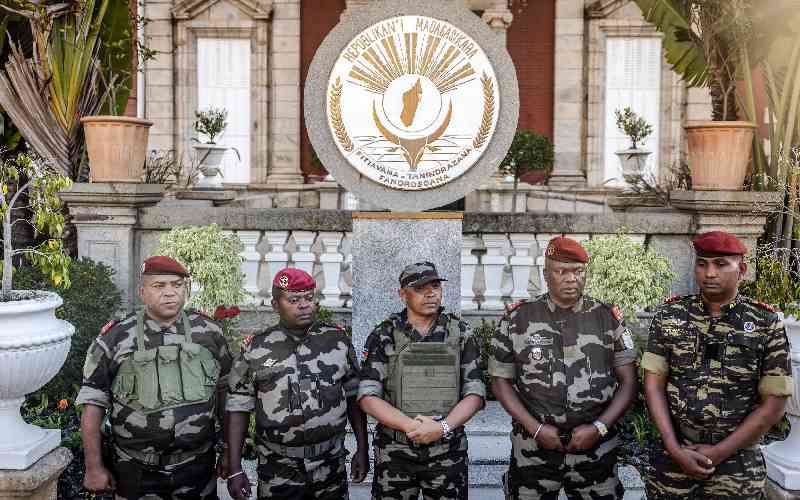
Malagasy Colonel Michael Randrianirina (centre), head of the CAPSAT military unit, in front of the presidential palace, where he announced they are taking power in Antananarivo on October 14, 2025. [AFP]
Graffiti along Antananarivo's traffic-choked roads reading "Thank you, Capsat" is a reminder of the decisive role the army unit played in protests that toppled Madagascar's government a year ago.
The defection of Capsat soldiers to side with weeks-long Gen Z-led demonstrations that began on September 25 delivered the final blow to then-president Andry Rajoelina, who fled the following day aboard a French military plane.
The United Nations said at least 22 people were killed in the first days of the protests, some by security forces and others in violence sparked by criminal gangs and looters.
With Rajoelina gone, the military installed Capsat commander Colonel Michael Randrianirina as "President of the Refoundation of the Republic of Madagascar" with the promise of elections within two years.
One year on, young activists who spearheaded the demonstrations initially focused on chronic water and electricity cuts say there is little evidence of any "Refoundation" in the impoverished Indian Ocean island.
"The basic demands still haven't been met," said Mihary Rakotondravelo, a prominent Gen Z figure.
"Before coming here, I had a power cut," he told AFP in an interview. "And water -- even though I live right in the city centre... you have to stay up quite late to get any."
Rakotondravelo's group is represented on national consultation committees involved in the bogged-down process of drafting a new Constitution, which the military government has committed to having in place ahead of presidential elections pledged for late 2027.
The proposals are to be presented in May before being put to a referendum, according to a timeline announced after the 16-nation regional group SADC called in August for a "return to constitutional normalcy".
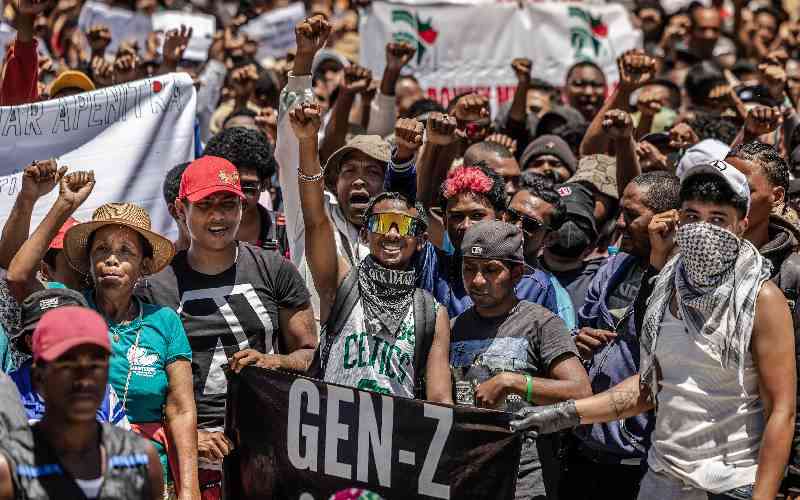
Residents and protesters cheer and hold banners as they gather for a civil society rally outside City Hall in Antananarivo, on October 13, 2025. [AFP]
Having stripped Rajoelina of his Malagasy nationality, the new leadership has also started legal proceedings against his inner circle.
The trial is due to start on Tuesday of a key ally, wealthy businessman Mamy Ravatomanga, over the 2025 transfer of Boeing aircraft to Iran in violation of US sanctions.
On September 1, a court sentenced a former top security official, general Richard Ravalomanana, to 10 years' hard labour for his role in last year's bloody crackdown.
The sentencing was welcomed by the Gen Z movement, which had been increasingly wary of the government after the arrests in April of several people involved in scattered protests over the slow pace of reforms.
Stay informed. Subscribe to our newsletter
The arrests were on charges of "endangering state security" that allow for 15 days in detention, a measure used by the previous government.
"It's very easy to pull that trigger... to crack down," said Transparency International vice-chair Ketakandriana Rafitoson. "It's a kind of mental terrorism."
"It's a military regime; they have the advantage of repressive forces and weapons," she told AFP.
While maintaining ties with the former colonial ruler France, the new government has also forged relations with Russia, receiving several arms deliveries from Moscow in a highly publicised military partnership that includes training by Africa Corps, which succeeded the Wagner mercenary group.
"They use the Russians right now as a kind of mercenary to protect them," said researcher and author Adrien Ratsimbaharison.
"But to completely cut off relations with the West is financially impossible for Madagascar at this time."
The ruling colonel has meanwhile asked France to persuade the International Monetary Fund to release 180 million dollars in blocked funds, according to the French National Assembly foreign affairs committee chairman, Bruno Fuchs.
The funds were apparently frozen after the government used subsidies to shield consumers from fuel price increases that would have been devastating in a country where around 80 percent of the population lives on less than $2.15 a day, according to World Bank data.
"He came to power on the back of a social movement, so he cannot afford to let fuel prices rise," Fuchs told AFP.
The Volobe hydroelectric dam project that involves French electricity giant EDF must also be approved after months of deadlock.
Expected to supply power to two million people, it will address a key demand of the Gen Z movement and will likely feature in campaigning for the looming elections in which the colonel and 2002-2009 president, Marc Ravalomanana, are among those expected to stand.
Subscribe to our newsletter and stay updated on the latest developments and special offers!


 Prefer the Standard on Google






 join
join