×

The Standard e-Paper
Stay Informed, Even Offline
 The Standard Group Plc is a
multi-media organization with investments in media platforms spanning newspaper
print operations, television, radio broadcasting, digital and online services. The
Standard Group is recognized as a leading multi-media house in Kenya with a key
influence in matters of national and international interest.
The Standard Group Plc is a
multi-media organization with investments in media platforms spanning newspaper
print operations, television, radio broadcasting, digital and online services. The
Standard Group is recognized as a leading multi-media house in Kenya with a key
influence in matters of national and international interest.

Audio By Vocalize
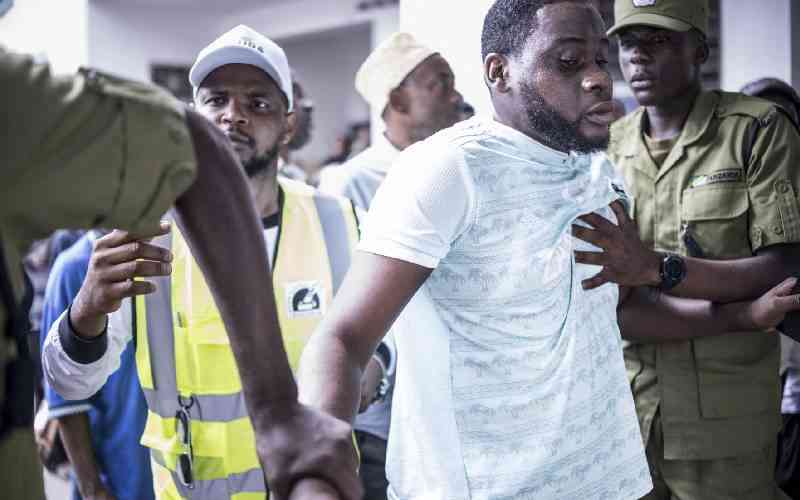
Tanzanian police detain a man accused of interfering with voting at a Stone Town polling station during the October 29, 2025, presidential elections. [AFP]
Some Tanzanians had hoped to protest on Tuesday against ongoing repression, but fear of government threats and traumatic memories of mass killings during last October's election mean unrest is unlikely.
Riot police, weapons drawn, are visible across the commercial capital Dar es Salaam after calls to protest on July 7, usually a day that celebrates the creation of the African Union of Tanganyika, the party that led Tanzania to independence in 1964.
One officer in an armoured vehicle told AFP it was simply "routine exercises", but the government recently banned all political gatherings, and has spent weeks trying to deter protesters by describing them as "criminals".
"Any previous use of force to preserve peace was just a taste of what is to come," warned Dar es Salaam's regional commissioner Albert Chalamila last week.
That was a chilling reminder of the police violence during the last election in October, when protests broke out over the banning of opposition candidates and a spate of abductions and murders targeting dissidents.
Rights groups and the opposition say security forces killed thousands during the election unrest. The government says 518 people died, without saying who did the killing.
Teresia, 32, lost her younger brother.
The 24-year-old was working at a butcher's shop on a main road where clashes between security forces and protesters were particularly violent. She was told by witnesses that he was accused of taking part and shot dead in the street.
"I'm scared and I've lost hope. I don't know when things will get better or when we'll see a brighter future," said Teresia, who only gave her first name for fear of reprisals.
With the government showing no remorse or accountability over the killings, Teresia says the atmosphere these days is grim.
"People continue to disappear, be abducted and even killed. The situation is very frightening and many of us no longer feel safe," she told AFP.
Despite calls for more protests to demand accountability and a new constitution, many are sceptical.
"I saw on social media that they're talking about demonstrating, but I don't think it will happen," said Nasibu, 29, sitting with his friends in the Ubungo district of Dar es Salaam, one of the hardest hit by the October killings.
"If protests were allowed, you wouldn't be seeing all this police deployment."
Stay informed. Subscribe to our newsletter
President Samia Suluhu Hassan was once seen as a liberalising force in Tanzania, reversing bans on opposition rallies and media when she took over on the sudden death of the authoritarian John Magufuli in 2021.
But hopes of a new dawn for Tanzanian democracy soon vanished, as she oversaw repression considered even worse than the Magufuli era.
For Elick, 35, who works in hospitality, the memories of last October are vivid: "Bodies scattered in the streets, abandoned, or transported on wooden carts.
"When we hear about July 7, we're worried and we can't help but wonder if the same thing will happen this time," he added.
The opposition is in despair.
Hassan's decision to ban rallies is "shameful and unconstitutional... at a time when we as a nation need to heal," said Dorothy Semu, leader of the ACT-Wazalendo party.
John Heche, number two in the Chadema opposition party, told AFP his team is under constant surveillance. Cars with plainclothes security personnel follow their officials day and night, he said.
The party is accustomed to violent repression.
Chadema's leader Tindu Lissu has been imprisoned on treason charges, facing a potential death penalty, since April 2025.
Other critics and opposition leaders have been abducted and beaten. Some, including a former ambassador who criticised Hassan, have disappeared.
The government's promises of a transparent report on the October violence has not materialised, said Semu.
"We expected to learn the whole truth and a proper plan on how to get justice and accountability, but nothing has been done," she said.
Subscribe to our newsletter and stay updated on the latest developments and special offers!








 join
join