×

The Standard e-Paper
Fearless, Trusted News
 The Standard Group Plc is a
multi-media organization with investments in media platforms spanning newspaper
print operations, television, radio broadcasting, digital and online services. The
Standard Group is recognized as a leading multi-media house in Kenya with a key
influence in matters of national and international interest.
The Standard Group Plc is a
multi-media organization with investments in media platforms spanning newspaper
print operations, television, radio broadcasting, digital and online services. The
Standard Group is recognized as a leading multi-media house in Kenya with a key
influence in matters of national and international interest.

Audio By Vocalize
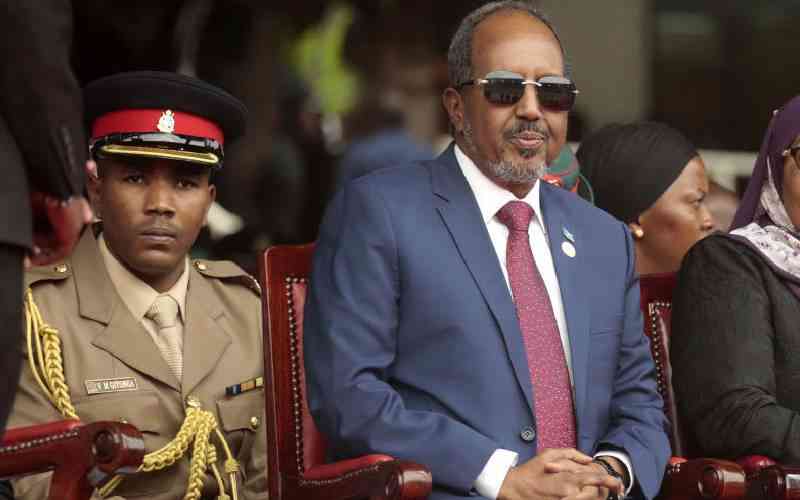
A political conundrum is slowly taking shape in Mogadishu with the expiry of the official four-year term of Somalia’s bicameral Federal Parliament on Tuesday, April 14.
In another month, the mandate of President Hassan Sheikh Mohamud will also grind to a halt on May 15, 2026 exactly four years since he was elected into office.
The diplomatic community in Somalia has for the past four months been seized with finding a solution to what might turn out to be a volatile situation by calling for a consultative conference among the political players and the civil society.
Twice in the month of February, futile attempts were made to broker an agreement on how to deal with the situation but on both occasions, they failed miserably.
The last meeting between the government and the opposition under the Somali Future Council (SFC) ended abruptly without any agreement on the way forward.
The bone of contention is how to deal with the forthcoming elections. While the government side is pushing for the adoption of universal suffrage, the opposition is happy to maintain the clan-based indirect election used since 2004.
The government used Mogadishu regional elections as a litmus test to show that it was possible to hold one-person one-vote. But the opposition maintains the security situation in the country cannot allow Somalia to exercise universal suffrage in picking its legislators and the president.
With the collapse of the consultative conferences, the government attempted to buy an extra year by adopting the country’s Provisional Constitution and, in the process, extending the mandate of both parliament and the president till April and May 2027 respectively.
However, this seems to have hit a brick wall following the expiry of the mandate for parliament last Tuesday and the jostling that has emerged.
Political experts caution that the end of the parliamentary mandate has placed the country in a transitional phase, political uncertainty and limits key institutions from making major legislative or oversight functions.
To complicate matters further, some MPs allied to the opposition resigned from their positions to paralyse parliament and push for elections.
Experts on the Somali constitution and parliament are on record saying the legislature can only operate in a caretaker role as it can only deal with essential and routine matters but it cannot pass new laws or approve major agreements.
The extension of the mandates of federal institutions, including the presidency, from four to five years was defended as necessary for transitioning to a one-person, one-vote electoral system.
The amendments have however, been strongly rejected by the opposition groups under SFC banner, together with Puntland and Jubbaland state administrations who argue that the Provisional Constitution clearly sets a four-year term. They also state that the changes made by joint sittings of parliament lack broad national consensus.
On the day the mandate of parliament came to an end, SFC accused President Mohamud of failing to meet their constitutional obligations to hold elections on time and warned of a potential political crisis.
Stay informed. Subscribe to our newsletter
The group directly criticized President Hassan Sheikh Mohamud, accusing him of failing to organize timely elections and seeking to postpone them without a broad political consensus.
The Council cautioned that the absence of a constitutionally compliant electoral process risks plunging the country into political uncertainty and instability.
The group also cautioned Mohamud that after May 15, 2026, he will not have the legitimacy to remain in office unless an agreed-upon election is held.
The warning comes amid heightened political tensions following constitutional amendments passed by the federal parliament before its term expired. The changes extend the mandates of federal institutions, including the presidency, from four years to five.
However, the amendments have been rejected by Puntland and Jubbaland, along with several opposition groups, who argue that the changes lack the required national consensus and contradict the spirit of the Provisional Constitution.
The Somali Future Council emphasized that the country’s stability and future depend on adherence to constitutional timelines, credible elections and inclusive political dialogue among all stakeholders.
The coming few days will determine the course this heated discussion will take.
Meanwhile, the Somali shilling is under siege with a number of businesses in the capital giving it a wide berth as a currency for trade.
A survey in the capital indicates that many businesses have dropped accepting the 1,000-shilling note, the country’s last widely circulating banknote. This has thrown the day-to-day trade into disarray.
Traders in key markets and public transport have ditched the shilling for the US dollar or the mobile money platforms leaving those who rely on the shilling high and dry.
The movement to the dollar is an indicator of the deep distrust in Somalia’s monetary system. Somalia has not printed new banknotes since the state collapsed in 1991, and nearly 98% of shilling notes in circulation are estimated to be counterfeit.
Somalia’s Central Bank has announced plans to reintroduce a redesigned shilling backed by a currency board arrangement however the reforms have faced repeated delays, leaving ordinary Somalis to bear the brunt of an unstable cash economy.

Subscribe to our newsletter and stay updated on the latest developments and special offers!






 join
join