×

The Standard e-Paper
Fearless, Trusted News
 The Standard Group Plc is a
multi-media organization with investments in media platforms spanning newspaper
print operations, television, radio broadcasting, digital and online services. The
Standard Group is recognized as a leading multi-media house in Kenya with a key
influence in matters of national and international interest.
The Standard Group Plc is a
multi-media organization with investments in media platforms spanning newspaper
print operations, television, radio broadcasting, digital and online services. The
Standard Group is recognized as a leading multi-media house in Kenya with a key
influence in matters of national and international interest.

Audio By Vocalize

The African Union (AU) has come under the spotlight following an annual summit, which critics say did very little to address problems bedeviling the 1.4 billion Africans, amid conflicts that threaten to sink more people into poverty and exploitation by world powers.
Furthermore, the wave of election violence that swept through recent polls across the continent was missing from the agenda, entrenching the age-old belief that brands the AU as an exclusive club for incumbent heads of state, where members avoid annoying one another.
A new report by the Pan-African Agenda Institute (PAAI), a Pan-African think tank, shows that deaths from conflicts rose 841 per cent from 44,000 deaths between 2004 and 2008 to 414,000 deaths from 2019 to 2023, overtaking figures recorded for the 1994 Rwanda Genocide.
It blamed this on failures by AU organs and policies, such as the African Peace and Security Architecture (APSA), to “silence the guns”, a worrying reality exacerbated by a lack of resources and proper strategy.
An estimated 76.3 million people were internally displaced, 81 million sought asylum, and $929 billion was lost to wars in places like Sudan, DRC, Somalia, Ethiopia, and the Sahel region over the last decade.
“The premier Pan-African organisation is not fit for purpose and has fundamentally failed in its core mandate to prevent wars, atrocities, and mass displacement,” stated PAAI in a statement.
“Why don't we collapse this AU and start something else?” read a reply to an AU communication published on social platform X this week. Another user wrote: “The AU is a useless organisation.”
Today, the organization faces a trust deficit and near-zero confidence, especially among youth, after a long streak of unpopular decisions and a reputation for playing a secondary role in matters it is expected to lead on, such as peace, security, and governance.
Despite it being a hot button at present, the matter of Russia’s deceptive recruitment of young Africans to the frontlines in its war with Ukraine was conspicuously missing from the communique’s from the summit suggesting that the matter may have never come up.
On Wednesday, February 25, Ukraine’s Foreign Minister Andrii Sybiha alleged that 1,780 Africans were fighting for Russia. Data from Kenya’s National Intelligence Service (NIS) show that 1,000 Kenyans have since been recruited.
Other recruits are from countries such as Ghana and South Africa.
Speaking at the summit, AU Commission Chairperson Mahmoud Youssuf noted the waning faith and need to diversify sources of funding for development as the global order shifts, and to drive an ongoing institutional reform agenda.
“The reforms of the Institution must continue. Mobilising domestic resources to finance the programmes of the Continent is no longer optional. It is essential, given the drying up of external funding. Our youths are impatient, our women expect more, and our civil society is taking a stand,” he said.
Among them was President William Ruto, who chaired various committees of Heads of State and held bilateral engagements on the sidelines of the event, which officially opened on Saturday, February 14, and wound up the day after.
Stay informed. Subscribe to our newsletter
This year, the 39th Ordinary Session of the Assembly of the African Union, commonly known as the AU Summit, and held in Ethiopian capital, Addis Ababa, prioritised water security through the theme: "Assuring Sustainable Water Availability and Safe Sanitation Systems to Achieve the Goals of Agenda 2063."
The lineup of speakers was rich, including Italian Prime Minister Giorgia Meloni and UN Secretary-General António Guterres.
In her speech, Meloni offered “true cooperation” with the African continent while calling out other foreign powers for engaging Africa only for its vast deposits of resources, such as rare earths, which are important raw materials for their industries.
Her speech played to the persistent accusation that the global superpowers often regard Africa as a lesser partner, opting to give aid where investments would be more appropriate.
“If you look down on someone, you cannot cooperate with them. If you want to plunder their resources, you are not cooperating with them. Equally, you cannot call charity cooperation,” Meloni said.
Guterres agreed with Meloni and pledged wide-ranging reforms in the UN to accommodate Africa. To start with, Africa would need to secure a long-demanded permanent seat at the agency’s Security Council.
“The absence of permanent African seats in the Security Council is indefensible. This is 2026 — not 1946,” he said.
President William Ruto stuck with his climate agenda and pushed for a deeper economic integration, as Ghana’s John Mahama pushed for reparations from the West over the legacy of the transatlantic slave trade and colonialism.
“They did tackle an important issue that could be of value, that is, reparations for colonial crimes or crimes of colonialism, which were presented to them from the Algiers conference,” noted international relations expert Professor Macharia Munene.
Calls for African solidarity, financial independence, appeals for peace, and a push for a front-row seat in shaping the global agenda dominated other speeches, including that of Burundi President Evariste Ndayishimiye, who was elected the new AU chairman for 2026, and AU Commission Chairman Mahmoud Ali Youssouf.
While all these seem noble, they were met with widespread skepticism or outright dismissal by some Africans who saw the annual event as another photo opportunity for the leaders they accuse of often talking in capital letters about the issues affecting the continent and not following up.
AU’s trend of giving a clean bill of health for elections conducted in questionable circumstances has pitted it against youthful Africans thirsty for change.
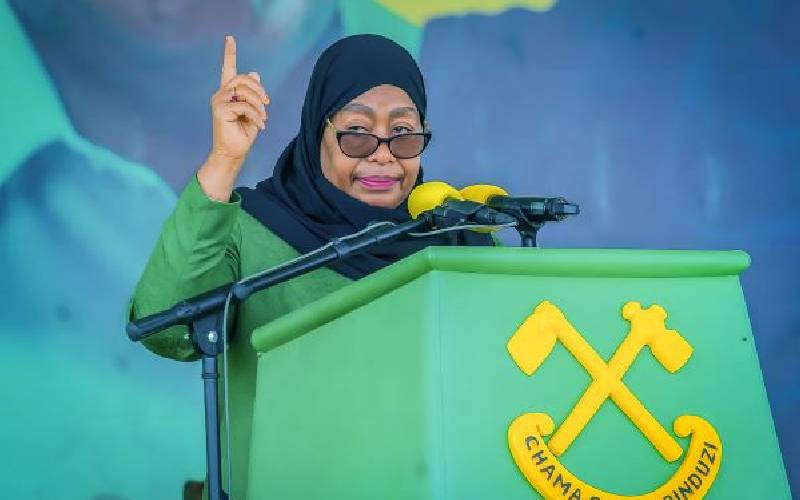
On November 1 last year, AUC Chairperson Mahmoud reached out to President Samia Suluhu with a message of goodwill following her victory in the October 27 Tanzania election, which the Southern African Development Community (SADC) found to be marred with irregularities.
Mahmoud expressed regret over the deaths from post-election protests and called on law enforcement officers to exercise restraint while urging citizens to protest peacefully and responsibly.
When Cameroon’s Paul Biya, 93, won another term in October to extend his 43-year rule, again the AU printed a congratulatory message amid violence and the arrest of protesters.
The same script played out in Uganda’s elections in January.
Further, the organization has been unable to help deter coups. In many instances, it has reacted to them by suspending member states where hostile power grabs happen, a move military leaders seem unafraid of.
Sudan, Burkina Faso, Mali, Niger, and Guinea-Bissau are currently barred from taking part in the activities of the organisation.
Plagued with consistent contribution defaults from some member states AU has often looked to international donors who are estimated to contribute about 70 per cent of funding for its programmes.
Surprisingly, the European Union, with which the AU is supposed to be peers, ranks among its biggest financiers.
“The AU does not have money. The same case with regional blocs like the Eastern African community (EAC), which now has eight members, but only two pay their dues regularly,” said Munene.
After 25 years of existence, AU is chasing a full integration of the markets. The AU Passport was launched in 2016 to enable free movement, but has failed to take off nearly ten years later.
Speaking during a session on the Implementation of the African Continental Free Trade Area (AfCFTA), President Ruto pitched for support of the initiative for jobs and industrialization.
“Today, Asia trades with itself to the level of 65 per cent, Europe is almost at 70 per cent, but in Africa we are struggling to get to 18 per cent,” he lamented.
Experts noted that AU can only change the continent’s fortunes through real reforms inluciding restructuring of organs and programmes to cut costs, developing key sectors such as agriculture, and construction of infrastructure.
Erastus Mwencha, the former Secretary General of the Common Market for Eastern and Southern Africa (COMESA), adds that the AU needs a supranational authority to make decisions binding for members, just as is the case in the EU.
“In the OAU charter, members could not intervene in internal affairs of another on things like elections and human rights, but the AU Charter empowers it to move from indifference to being proactive, but the institution lacks proper instruments to have a supranational capacity for implementation,” said Mwencha.
At the same time, the AU has been unable to shake off the “puppet” tag owing to its dependency on foreign powers for funding.
AU took a step back as foreign powers mediated for peace in the eastern Democratic Republic of Congo, where the USA and the United Arab Emirates played key roles while its own process faltered.
The involvement of these countries has come at a cost for the African, who cedes valuable resources in return.
Formed in 1993, the EU has achieved much in delivering regional integration, economic coordination, peace, and asserting global influence.
While members of the EU have ceded powers to some institutions of the union whose decisions are legally binding, countries in the AU have strongly held to their sovereignty, complicating the implementation of decisions, leaving them to the goodwill of individual governments.
The EU also has a strong and independent financial backing compared to the AU’s chronic underfunding.

Subscribe to our newsletter and stay updated on the latest developments and special offers!







 join
join